
Switching it Up
Advancements in contact lens technology have made contact lenses a more popular option than ever. Whether you want to switch up from your eyeglasses and try something new or prefer the feel of contact lenses, Albemarle Eye Center offers contact lens services that go well beyond what most optical shops provide.
The optometrists at Albemarle Eye Center will educate you on wearing contact lenses and proper maintenance to preserve your lenses.
Unlike standard optical shops, our team stays up-to-date on the latest contact lens technology, and we can help provide you with clear, comfortable vision. Contact us to learn more about contact lenses, and book your contact lens eye exam today.

Contact Lenses
& You
A contact lens prescription can be determined after carefully observing the lens on the eye and the eye’s response to that lens. Contact lenses have evolved over the years. Earlier iterations of contact lenses focused on correcting refractive errors such as nearsightedness, farsightedness, and astigmatism.
Modern contact lenses have evolved and can now address corneal conditions such as keratoconus and even dry eye disease.
Albemarle Eye Center offers several types of contact lenses, and through our comprehensive exam, we can determine what the best option is for you.
Types of Contact Lenses
There are 2 major categories of contact lenses, soft contact lenses and rigid gas permeable (RGP) contact lenses.
Within these 2 main categories, there are special types of contact lenses that solve different vision problems. Albemarle Eye Center takes the extra step and provides several specialty contact lenses.
Soft Daily Wear Contact Lenses
Soft daily wear lenses are made of soft water-containing, flexible plastics called hydrogels. Soft daily wear lenses allow oxygen to pass to the cornea to maintain its health and clear vision. Because of these lenses’ soft, thin, and flexible nature, they are easier to adapt to than RGP contact lenses.
A silicone hydrogel variant of soft daily wear contact lenses is also available and allows more oxygen to reach the cornea.
Soft daily wear lenses require consistent cleaning and disinfection, as they can attract deposits of protein from your tear film.
Rigid Gas Permeable (RGP) Contact Lenses
Rigid gas permeable contact lenses are more durable and resistant to deposit buildup and generally deliver a more precise, crisper visual experience. RGP lenses tend to last longer than soft contact lenses and are easier to handle.
RGP lenses do not tear, but they can break, and it can take several weeks to adapt and get used to wearing RGP lenses compared to soft contacts.
Toric Contact Lenses
Contact lenses that deal with astigmatism are called toric lenses. Toric lenses are available in both soft contacts and rigid gas permeable contact lens prescriptions. People dealing with astigmatism most often have an asymmetrical curvature of the cornea that makes it oval shaped.
Toric contact lenses require a more complex fitting process in order to obtain the most precise vision.
Scleral Contact Lenses
If you find yourself struggling with issues like keratoconus or dry eye disease, traditional contact lenses may not be comfortable for you.
Scleral contact lenses are larger than traditional contacts and rest on the sclera of your eyes, allowing for space over your cornea’s surface for breathability.
Scleral lenses can provide your ideal vision experience without worrying about keratoconus and other corneal issues.
Decorative, Cosmetic Contact Lenses
Albemarle Eye Center also offers Plano or non-corrective lenses for people who do not need vision correction but want a cosmetic change.
These contact lenses can temporarily change your eye color and are mostly used for different themes or to dress up on holidays. Colored lenses are also available for those who do have contact lens prescriptions.
While these lenses are not for vision correction, they still require a proper contact lens fitting, something optical shops alone cannot provide without a licensed eye care professional on staff.

Get Your Contact Lenses Today
Albemarle Eye Center offers a wide selection of contact lens types, and our team can help ensure you are a confident contact lens wearer with our comprehensive contact lens exam and fitting.
Get in contact with us for more information, and book your comprehensive exam and contact lens fitting today.

Order Your Contacts with Abby
Order your contacts the Abby way. The friendly and easy way to order your contact lenses – from your eye doctor that you already know and trust. Ordering through Abby ensures that you have an easy, convenient, and secure contact lens ordering experience. You can track your orders, see your prescription at any time, and stay up to date on details like when your prescription will expire.
Ask your local optician and sign up for Abby today!
Already Registered? Click here to order!
Frequently Asked Questions
What is a contact lens eye exam, and how is it different from a regular eye exam?
A regular eye exam evaluates your overall eye health and determines your prescription for glasses. A contact lens exam goes a step further. In addition to measuring your vision, your optometrist will take specific measurements of your cornea’s curvature and size to determine the correct lens fit for your eyes. Your doctor will also assess how your eyes respond to having a lens placed on them. Because contact lenses sit directly on the eye, these additional measurements are essential for both comfort and eye health. You cannot use a glasses prescription to order contact lenses — a separate contact lens prescription is required.
How do I know if I need a contact lens fitting?
Any time you want to wear contact lenses for the first time, switch lens brands or types, or if your current lenses feel uncomfortable or your vision has changed, a contact lens fitting is necessary. Fittings are also required even for cosmetic or non-prescription lenses, since an improper fit can cause irritation, corneal damage, or infection. If it has been more than a year since your last fitting or your prescription has expired, scheduling a new fitting before ordering contacts is strongly recommended.
How often should I update my contact lens prescription?
Contact lens prescriptions typically expire after one year, though your optometrist may recommend a different schedule based on your eye health. Annual exams are important even if your vision feels unchanged, because your corneal shape, tear film, and ocular health can shift over time in ways that affect lens fit and comfort. Wearing contacts on an expired prescription can lead to ill-fitting lenses and potential eye health issues. Staying current with your prescription ensures your lenses continue to perform the way they should.
Can I switch from eyeglasses to contact lenses during my exam?
Yes. If you currently wear glasses and want to transition to contact lenses, let your optometrist know when scheduling your appointment so they can plan for the additional contact lens fitting time. During the exam, your doctor will evaluate whether your eyes are suitable candidates for contact lens wear, taking into account your corneal health, tear production, and prescription. Most patients with glasses prescriptions, including those with astigmatism or presbyopia, can successfully transition to contacts with the right lens type.
What types of contact lenses are available at Albemarle Eye Center?
Albemarle Eye Center offers a comprehensive range of contact lens options to match a variety of vision needs and lifestyles:
- Soft daily wear lenses for everyday comfort and convenience
- Rigid gas permeable (RGP) lenses for sharper vision and long-term durability
- Toric lenses for patients with astigmatism, available in both soft and RGP materials
- Scleral lenses for patients with keratoconus, dry eye disease, or irregular corneas
- Decorative and cosmetic lenses for non-corrective color changes, which still require a proper fitting
Your optometrist will recommend the best lens type based on your prescription, corneal measurements, lifestyle, and eye health needs.
Our Locations
Our Services






Albemarle Clinical Trials
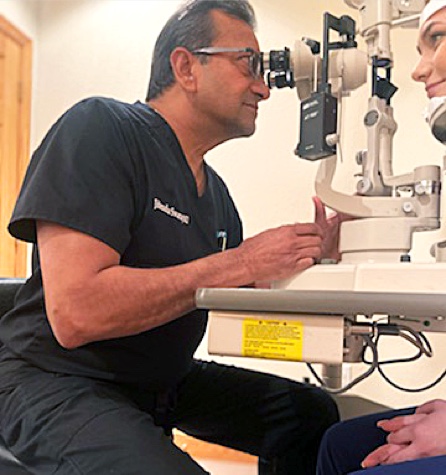
At Albemarle Eye Center, our research department continues to take part in numerous FDA-monitored clinical trials.
Our advanced eye care center is committed to improving ocular health, which is why we’re always on the search for new treatment options, medications, and medical devices that can benefit our patients


We are a proud partner of US Eye, a leading group of patient-centric, vertically integrated multi-specialty physician practices providing patients with care in ophthalmology, optometry, dermatology and cosmetic facial surgery.