The Leaders
in Cataract Surgery
Cataracts can be a struggle to deal with, and if you are looking for treatment and an experienced team of cataract experts, Albemarle Eye Center has you covered.
Our team of ophthalmologists has an extensive background in cataract procedures and a passion for restoring the clarity and quality you need to maximize your vision. If cataracts are interfering with your vision, contact our advanced laser and cataract center today for a consultation.


What Are Cataracts?
A cataract is a clouding of your eye’s normally clear lens. As you get older, the proteins in your lens can break down and cause things to look blurry, hazy, or less colorful. This clouding of the lens can keep light and images from reaching your retina.
Cataracts can develop slowly and not disturb your eyesight early on. But with time, cataracts can eventually start interfering with your day-to-day vision. Cataracts can be the reason sharp images become blurred and appear discolored.
Your risks of developing cataracts can increase if you smoke, have diabetes, or have an eye injury. Cataract surgery is a great option when your glasses no longer seem to work for you and even a change in prescription does not help.
Exploring Laser Cataract Removal
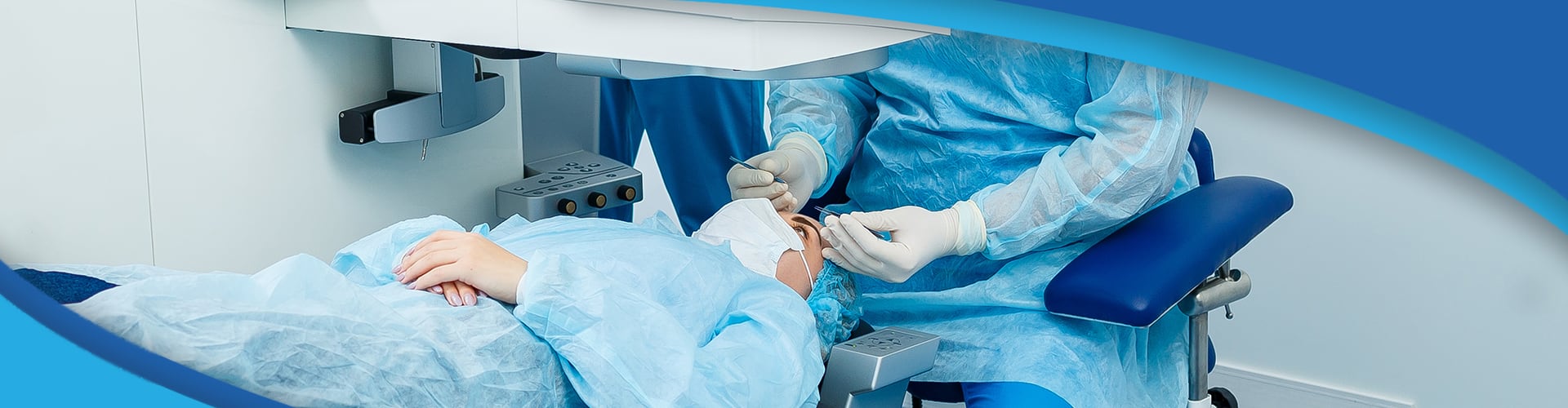
If non-surgical treatments such as anti-glare glasses, lamps, or magnifying lenses do not help with cataracts, surgery is the only way to treat them. There are no medications, dietary supplements, or exercise that have been proven to prevent or cure cataracts. Laser cataract surgery is an outpatient procedure and usually requires only a few hours of your time from start to finish.
Laser cataract surgery utilizes a device that combines computer-assisted analysis, measurements, and laser technologies to deliver the best possible results.
Our experienced cataract surgeons can usually perform the LenSx® procedure in 6 to 8 minutes at our laser cataract surgery center.
During the procedure, an incision is made with a state of the art femtosecond laser system. The doctor uses the computer-assisted laser system to provide a precise circular opening. After the circular opening is made, the LenSx® system aids the doctor in lens fragmentation. Following lens fragmentation, the cataract is removed, and an IOL (intraocular lens) will be placed into your eye.
The lens implant replaces your natural lens, and the incision will seal itself. The recovery time following cataract surgery is quick and relatively easy—most of our patients notice improved vision within the first 24 hours.
Artificial Lens Technology at Albemarle Eye Center
During your surgery, your cataract surgeon will remove the cloudy natural lens from your eye. Following removal of the natural lens, in most cases, a permanent intraocular lens (IOL) implant will replace the natural lens to restore focusing power. Albemarle Eye Center offers various types of IOL implants for cataract surgery. Your doctor will discuss which lens will be the best fit for you.
Traditional Monofocal Lens
Traditional monofocal lenses are the most common lens used with cataract surgery. It has one focusing distance and is set up to focus for up close, medium-range, or distance vision.
Astigmatism Correct Lens (Toric Lens)
Toric lenses are a special monofocal lens specifically designed to treat patients with astigmatism. The design of the toric lens makes it possible to reduce or eliminate astigmatism and remove your need for glasses at a distance.
Presbyopia Correcting Lens (Multifocal Lens)
This type of advanced intraocular lens uses multiple prescriptions to help you see clearly at various ranges. Multifocal lenses split light at different points in the lens, so you can achieve clear vision whether reading a book or watching a big theater screen.
RXSIGHT™ LIGHT ADJUSTABLE LENS
Albemarle Eye Center now offers the Light Adjustable Lens, a cutting-edge addition to our premium lens technology. This innovative lens allows your surgeon to continue refining your vision after cataract surgery, giving your eyes time to heal and adjust before finalizing your optimal vision. The adjustment process is performed in-office through a series of brief, painless light treatments. The Light Adjustable Lens is often recommended for patients who have had previous laser or corneal surgery. Ask our cataract surgeons if the Light Adjustable Lens is right for you.
Why choose the Light Adjustable Lens?
With the Light Adjustable Lens, you will have the unique opportunity to adjust and preview your vision until it meets your personal desires and lifestyle requirements. This optimization is done by your eye doctor after lens implantation through a series of light treatment procedures that take only a few minutes each session.
Who can benefit from the Light Adjustable Lens?
The U.S. Food and Drug Administration has approved the Light Adjustable Lens and Light Delivery Device for patients with preexisting astigmatism of 0.75 diopters or more who are undergoing cataract surgery.
What to expect after surgery
In the weeks following your surgery, you and your doctor will work together to optimize your vision using UV light treatments. During this period, you will need to wear UV-blocking glasses provided to you by your doctor. These glasses will protect your eyes from exposure to all other sources of indoor and outdoor UV light, which can cause uncontrolled changes to the Light Adjustable Lens.
The UV protective glasses must be worn during all waking hours, from the time of lens implantation until 24 hours after your last light treatment is completed. At that point, no further changes can be made to the implanted Light Adjustable Lens, and you can remove the UV protective glasses and enjoy your custom vision!
Clear Up Your Vision
Many people deal with cataracts daily. At Albemarle Eye Center, we want to help you regain clear vision. Find out how our team can help treat your cataracts by booking your appointment today.
Frequently Asked Questions
How do I know if I need cataract surgery?
The clearest sign is when cataracts begin interfering with daily life — driving at night, reading, recognizing faces, or watching television becomes noticeably difficult. Other indicators include seeing halos around lights, increased sensitivity to glare, or finding that even an updated glasses prescription no longer improves your vision. The only way to know for certain is through a comprehensive eye exam. If cataracts are affecting your quality of life, surgery is likely the right next step.
What is the recovery time for laser cataract surgery, and when can I return to normal activities?
Recovery from laser cataract surgery is generally quick. Most patients notice improved vision within the first 24 hours. You can typically resume light daily activities such as reading or watching television within a day or two. Driving is usually cleared within a few days, once your surgeon confirms your vision is stable. Strenuous activities and swimming should be avoided for a few weeks. Full healing of the eye can take four to six weeks, though most patients feel comfortable well before then.
What types of lenses are available for cataract surgery?
Albemarle Eye Center offers several intraocular lens (IOL) options depending on your vision needs and lifestyle:
- Monofocal lenses correct vision at one distance (near, intermediate, or far) and are the most commonly used option.
- Toric lenses are designed for patients with astigmatism and can reduce or eliminate the need for distance glasses.
- Multifocal lenses use multiple prescriptions built into a single lens to support clear vision at a range of distances.
- The Light Adjustable Lens (RxSight) allows your surgeon to fine-tune your vision after surgery with UV light treatments — a unique advantage for patients seeking precision-customized results.
Your surgeon will help determine which lens best suits your eyes and daily vision goals.
What is the Light Adjustable Lens, and is it right for me?
The Light Adjustable Lens (LAL) by RxSight is an FDA-approved premium IOL that can be adjusted after implantation. Rather than locking in your final prescription at the time of surgery, the LAL allows your surgeon to refine your vision during a series of brief, painless in-office UV light treatments once your eye has healed. This makes it possible to preview and confirm your vision outcome before it is finalized. The Light Adjustable Lens is particularly well-suited for patients who have had previous LASIK, PRK, or other corneal procedures, as well as those who want the most personalized visual result possible. During your consultation, your surgeon can advise whether this lens is the right choice for your eyes.
Can cataracts come back after surgery?
No, once the cloudy natural lens is removed and an intraocular lens is implanted, cataracts cannot return. However, some patients develop a condition called posterior capsule opacification (PCO), sometimes called a “secondary cataract.” This occurs when the thin membrane holding the IOL in place becomes cloudy over time. PCO is easily and painlessly treated in-office with a quick laser procedure called a YAG capsulotomy, which restores clear vision within minutes.

Our Locations
Our Services






Albemarle Clinical Trials
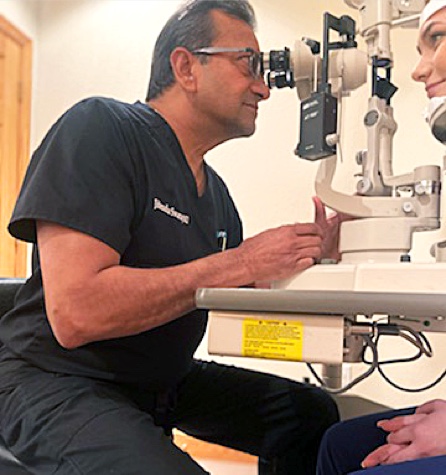
At Albemarle Eye Center, our research department continues to take part in numerous FDA-monitored clinical trials.
Our advanced eye care center is committed to improving ocular health, which is why we’re always on the search for new treatment options, medications, and medical devices that can benefit our patients


We are a proud partner of US Eye, a leading group of patient-centric, vertically integrated multi-specialty physician practices providing patients with care in ophthalmology, optometry, dermatology and cosmetic facial surgery.