
Written By: Sean Smolenyak, O.D.
Table of Contents
Vision changes are a natural part of aging, but not all changes are caused by the same condition. Cataracts are among the most common eye conditions affecting adults later in life and can gradually interfere with everyday activities such as reading, driving, and recognizing faces. Understanding how cataracts differ from other vision changes can help patients recognize symptoms early and seek appropriate care.
Many people assume that blurry vision is simply part of getting older, but cataracts develop through specific changes inside the eye’s natural lens. Recognizing how cataracts affect vision—and how modern treatments address them—can help you know when professional evaluation may be helpful.
What is a cataract?
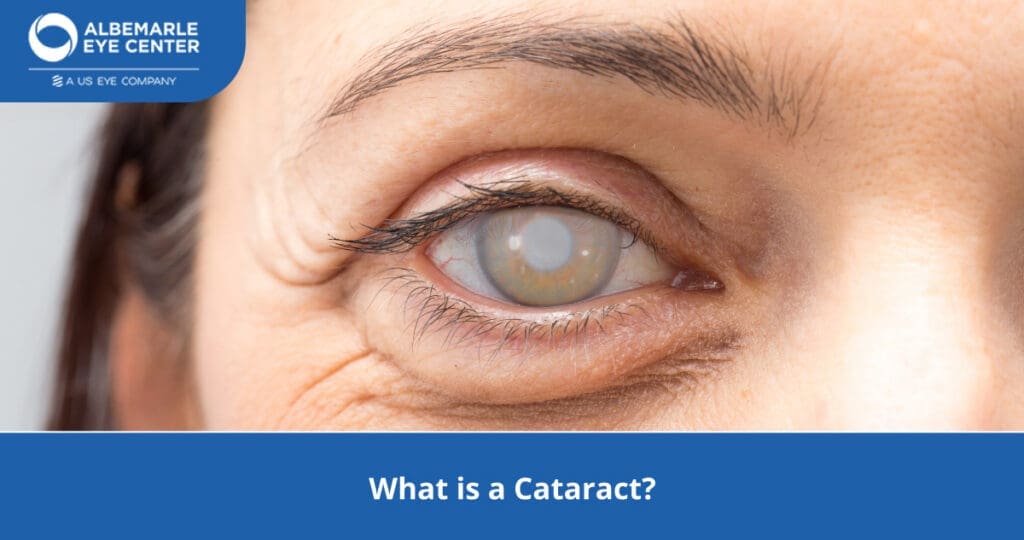
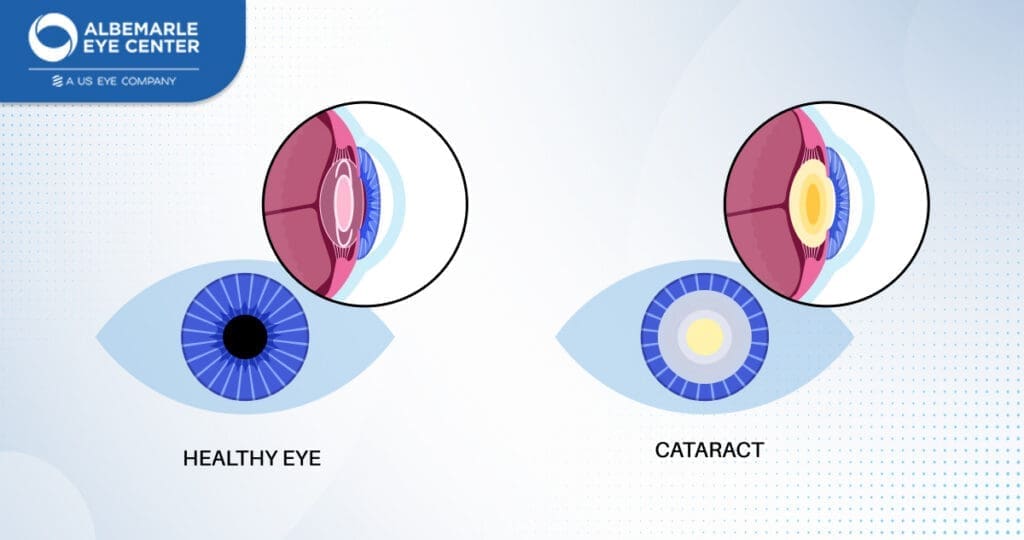
A cataract is a clouding of the natural lens of the eye. It is one of the most common eye conditions due to age, though trauma, certain medications, systemic diseases, or other ocular surgeries can also cause cataracts.
The process of cataract formation involves proteins and fibers within the lens breaking and clumping, eventually clouding the lens. This leads to less flexibility and transparency, along with a thicker lens.
What Are the Symptoms of Cataracts?
The symptoms of cataract formation and growth are numerous but center around varied impacts on vision. These include, but are not limited to: cloudy or dimmed vision, worsening night vision, sensitivity to light and glare, halos around light sources, fading color perception, and the need for brighter light for reading and other activities.
What Happens to Your Vision When Cataracts Progress?
As cataracts develop, the changes in the lens can begin to interfere with everyday visual tasks. Activities that once felt simple, such as reading small print, driving at night, or adjusting to bright sunlight, may become increasingly difficult.
Because cataracts affect how light enters the eye, many patients notice that lighting conditions have a larger impact on their vision. Bright lights may cause glare, while dim environments may make it harder to see details clearly.
For most patients, the early phases of cataract growth are not particularly bothersome. Often, adjusting prescription glasses can be helpful and delay the need for surgery. Your eye care provider can advise if this is worth the investment.
Cataract vs Presbyopia – What’s the Difference?
Cataracts and presbyopia are both common causes of vision changes as people age, but they affect the eye in different ways. Presbyopia occurs when the lens gradually loses flexibility, making it harder to focus on nearby objects. At the same time, cataracts develop when the lens becomes cloudy, blocking light from passing through clearly.
Because both conditions often appear during midlife and beyond, patients sometimes assume they are experiencing the same issue. However, presbyopia typically affects near vision first and is often corrected with reading glasses, while cataracts can impact overall visual clarity.
An eye examination can determine whether vision changes are due to cataracts, presbyopia, or a combination of both.
| Feature | Cataracts | Presbyopia |
| What happens in the eye | The eye’s natural lens becomes cloudy, blocking light from passing clearly through the eye. | The eye’s lens becomes less flexible, making it harder to focus on nearby objects. |
| Main cause | Most commonly caused by aging, but may also result from eye injuries, medications, diabetes, or previous eye surgery. | Caused by natural aging of the lens, typically beginning in the early to mid-40s. |
| How vision is affected | Vision may appear cloudy, blurry, dim, or yellowed, and glare from lights may increase. | Near vision becomes more difficult, especially when reading small text or using a phone. |
| Symptoms patients notice | Glare from headlights, halos around lights, faded colors, blurry vision, and difficulty seeing at night. | Holding reading materials farther away, eye strain when reading, and difficulty focusing on small print. |
| Speed of progression | Usually develops gradually over years, slowly worsening vision clarity. | Develops gradually but predictably as the lens loses flexibility with age. |
| Treatment options | When vision becomes significantly affected, cataract surgery replaces the cloudy lens with an artificial lens. | Typically managed with reading glasses, bifocals, or multifocal contact lenses. |
| Impact on overall vision | It can affect distance vision, night vision, and color perception. | Primarily affects near vision tasks such as reading or sewing. |
| Can both occur together? | Yes. Many adults experience both cataracts and presbyopia as part of the aging process. | Yes. Presbyopia often appears earlier, and cataracts may develop later. |
Tip: Because both conditions commonly occur with aging, a comprehensive eye exam is the best way to determine which condition is affecting your vision and what treatment options may be most appropriate.
Why Do Cataracts Become More Common With Age?
The lens of the eye changes naturally over time. As part of the aging process, the proteins within the lens gradually break down and reorganize, which can affect how light passes through the eye.
While these changes occur slowly, they can eventually lead to the clouding associated with cataracts. Because this process develops over many years, cataracts are often considered a normal part of aging rather than a sudden medical condition.
Other health factors and lifestyle influences may contribute to the rate of cataract development, but age remains the most common reason people experience this condition.

What are the Treatment Options for Cataract?
Once a cataract impairs your vision and daily function, surgery becomes your best option. The decision to undergo surgery for the most part is not dependent on a specific level of vision, but rather on whether the cataract is bothersome enough to warrant surgery. Cataract surgery is among the most common procedures performed in the United States each year.
A typical surgery lasts only about 10 minutes (though you’ll likely be at the surgical center for a few hours). Through a small incision, often less than 2 mm, a cataract surgeon will remove the natural cloudy lens and replace it with an artificial lens. This artificial lens can be tailored to the patient’s eye and often reduces the need for glasses afterward. Advances in artificial lens technology have allowed some patients the option to almost eliminate glasses completely. Based on preoperative measurements and in-depth discussions with the surgeon, the best lens choice can be made for each patient.
Recent improvements in the surgical procedure have centered on the use of lasers to perform some steps, including making incisions and aiding in the breakdown of the natural lens before final removal. Whether you are a candidate for laser-assisted cataract surgery will be determined during your evaluation with the surgeon.
Vision typically improves rapidly after surgery, though not everyone will see clearly immediately. Often, drops are prescribed to prevent infection and accelerate healing. Frequent appointments will allow your eye care provider to monitor your healing and maximize your visual outcomes, updating your glasses prescription as needed.
Key Takeaway
- Cataracts occur when the natural lens of the eye becomes cloudy, reducing visual clarity.
- The condition most commonly develops as part of the natural aging process.
- Early cataracts may cause minimal symptoms, and vision changes can often be managed with updated glasses initially.
- As cataracts progress, they may lead to blurred vision, glare sensitivity, and difficulty seeing at night.
- Cataract surgery is one of the most common and successful eye procedures, helping restore clearer vision for millions of patients each year.
Taking the Next Step Toward Clearer Vision
In summary, cataract growth and progression are part of the normal aging process of the eye. With advancements in lens and surgical technologies, cataract surgery is both a safe option and can result in a substantial improvement in the visual quality of life.
If you’ve noticed increasing glare from lights, difficulty seeing clearly at night, or changes in how colors appear, it may be time for a comprehensive eye examination. Cataracts develop gradually, and early evaluation allows your eye care provider to monitor vision changes and discuss treatment options when the time is right.
Modern cataract surgery is a safe and highly effective procedure that has helped millions of patients restore clear vision.
If you’re wondering whether cataracts may be affecting your sight, speaking with an experienced eye care professional can help you understand your options and protect your long-term visual health.
Frequently Asked Questions
Is laser cataract surgery safer than traditional cataract surgery?
Many patients wonder whether using a laser makes the procedure safer than traditional methods. While both approaches are considered safe and effective, laser-assisted cataract surgery offers greater precision for certain steps and may reduce some risks, such as incision complications. However, individual safety and suitability depend on each patient’s eye health and specific needs.
How do I know if I am a candidate for laser cataract surgery?
Not every patient is a candidate for laser cataract surgery. Factors such as the type and density of your cataract, the health of your cornea, and your overall eye anatomy play a role. Your surgeon will perform a thorough evaluation and discuss whether laser-assisted surgery is the best option for you.
Does laser cataract surgery hurt or feel different than traditional surgery?
Patients often ask about comfort during the procedure. Both traditional and laser cataract surgeries are typically painless due to numbing eye drops and mild sedation. Some people report feeling slight pressure during the laser portion, but discomfort is minimal and temporary.
Will I still need glasses after laser cataract surgery?
Laser cataract surgery can improve vision, and pairing it with advanced intraocular lenses (IOLs) may reduce your dependence on glasses. However, the need for glasses after surgery depends on the type of lens implant chosen, your eye’s unique characteristics, and your visual goals. Your doctor will discuss the best options for your lifestyle.
How long does it take to recover from laser cataract surgery?
Recovery time is generally quick, with many patients noticing improved vision within a few days. Most resume normal activities within a week, but complete healing can take a few months. Your surgeon will provide detailed post-operative instructions and schedule follow-up visits to monitor your progress.
Ready to Find Out If Cataracts Are Affecting Your Vision?
Here at Albemarle Eye Center, our team always goes above and beyond to provide you and your family with the eye care you need.
From laser eye surgery to routine eye care, you can trust that your vision and eye health will be completely taken care of.
With locations in Edenton, Elizabeth City, Kinston, Kitty Hawk, and Washington, you’ll never be too far from high-quality eye care provided by a team of expert ophthalmologists.
Albemarle Clinical Trials
At Albemarle Eye Center, our research department continues to take part in numerous FDA-monitored clinical trials.
Our advanced eye care center is committed to improving ocular health, which is why we’re always on the search for new treatment options, medications, and medical devices that can benefit our patients.