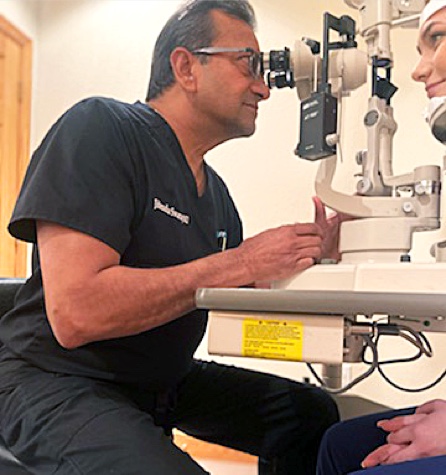


Reviewed By: Dr. Jitendra Swarup, M.D.
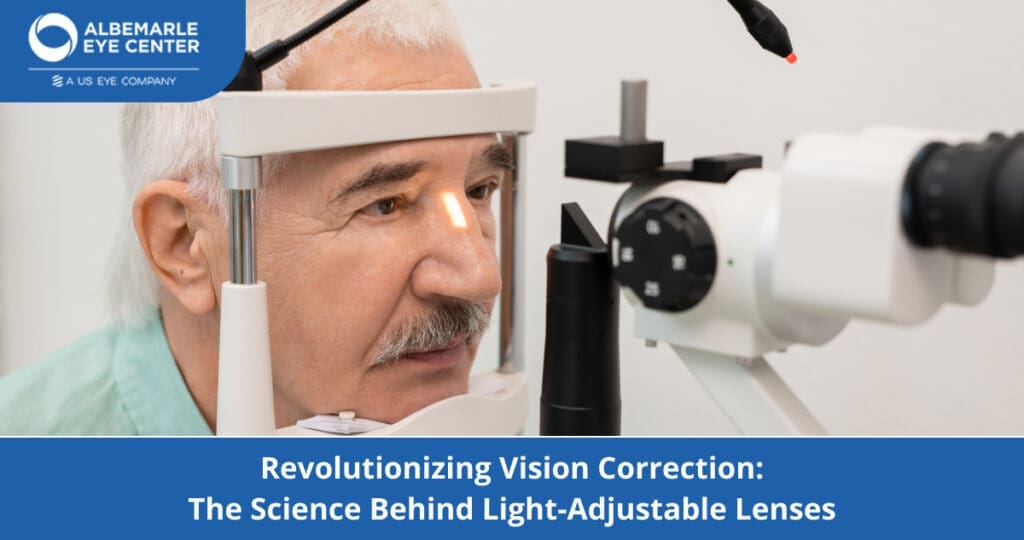
The field of ophthalmology has made breakthroughs with the Light Adjustable Lens (LAL) from RxSight, changing the nature of post-cataract-surgery vision correction. Albemarle Eye Center (AEC) is now among the first practices in Washington, North Carolina, to offer this technology, and on April 24 Dr. Jitendra Swarup performed AEC’s inaugural LAL procedure. The premium lens enables precise adjustments to vision after surgery, providing patients with an unprecedented level of post-operative customization.
With the ability to fine-tune vision to near perfection, the RxSight LAL uses a special photosensitive material that reacts to UV light, allowing targeted changes to the lens’s power for optimal clarity. A final UV treatment then “locks in” the prescription for results tailored to each eye. As Dr. Swarup notes, “Because small variations in healing are common, the Light Adjustable Lens lets us fine-tune the outcome for every patient’s unique lifestyle.”This blog explains how LAL enhances patient satisfaction by offering precise, customizable vision correction like never before. Learn more about the innovative lens and how Albemarle Eye Center’s five locations—Edenton, Elizabeth City, Kinston, Kitty Hawk, and Washington—are bringing it to eastern North Carolina.
What Is the RxSight Light Adjustable Lens (LAL)?
The RxSight Light Adjustable Lens is an intraocular lens (IOL) used in cataract surgery and refractive lens-exchange procedures. Unlike traditional IOLs, AEC’s LALs can be adjusted after surgery to optimize visual outcomes. These lenses are made of a unique photosensitive material that reacts to ultraviolet (UV) light.
How Does a Light Adjustable Lens Work?
The science lies in a series of light-treatment sessions after the eye has begun healing:
1. Photosensitive material – Light-sensitive molecules are evenly distributed throughout the lens.
2. External UV light – A specialized UV light source targets the lens in the clinic. The energy triggers molecular changes within the lens material.
3. Fine-tuning – By applying quick, painless light patterns, doctors alter lens curvature to correct refractive errors such as
- Myopia (nearsightedness)
- Hyperopia (farsightedness)
- Astigmatism
4. Non-invasive adjustments – Everything is done externally; no additional incisions are required.


Benefits of LAL vs Standard IOLs
When compared to traditional fixed-power implants, Light Adjustable Lenses offer measurable clinical advantages.
Primary benefits include:
- Customized vision – Final prescription is set after the eye’s natural healing variations are known.
- Postoperative flexibility – Adjustments can target distance, intermediate, or near focus.
- Improved accuracy – Studies show a higher likelihood of achieving 20/20 or better without glasses.
- Safety – Treatments are quick, painless, and performed under your surgeon’s control.
For patients seeking advanced refractive precision, this light adjustable lens approach addresses limitations inherent to standard IOLs.
Who Is a Good Candidate?
Not all cataract patients require adjustable technology, but certain profiles benefit significantly from a customizable cataract lens solution.
Common candidate characteristics:
- Individuals seeking reduced reliance on glasses after surgery
- Patients with prior refractive surgery or complex prescriptions
- Those with active lifestyles requiring precise visual performance
- Patients comfortable with multiple postoperative visits
- Candidates for light adjustable lens cataract surgery who value customization
Eligibility is determined through a comprehensive preoperative evaluation.
What to Expect After Surgery
Postoperative care differs slightly compared to traditional cataract procedures due to the adjustable nature of the lens.
Patients should expect:
- Temporary use of UV-protective eyewear until final lock-in
- Multiple short, painless in-office light treatments
- Ongoing vision testing between adjustment sessions
- Final stabilization following completion of lens customization
This structured process allows the LAL intraocular lens to deliver refined visual accuracy based on real-world results.
Pros & Cons of LAL
As with any advanced surgical technology, there are advantages and considerations to evaluate.
Pros
- High level of postoperative precision
- Ability to correct residual refractive error non-invasively
- Reduced need for enhancement surgeries
- Advanced adjustable lens technology eye surgery platform
Cons
- Requires multiple follow-up visits
- Temporary lifestyle adjustments during the treatment phase
- Not appropriate for every clinical profile
Understanding both sides supports informed decision-making.
Combining RxSight LAL Technology with Laser Cataract Surgery
Pairing AEC’s Light Adjustable Lenses with femtosecond laser-assisted cataract surgery (FLACS) pushes customization even further. Laser precision during lens removal and placement reduces variability, while post-surgery light treatments hone the prescription. The approach may allow many patients to reach 20/20 vision—or better—without additional surgical touch-ups.
A Milestone for Albemarle Eye Center
Cataract surgery is the most common surgical procedure in the United States, and demand will rise as the population ages. Introducing the Light Adjustable Lens positions Albemarle Eye Center at the forefront of cataract technology in eastern North Carolina and the broader US Eye network.
To schedule a cataract consultation or learn whether the LAL is right for you, call or visit any AEC location.
**Please note that the suggestions provided in this blog are for general informational purposes only and may not be suitable for your specific insurance plan and eye care needs. It is important to consult a qualified healthcare professional for personalized advice on laser treatment for glaucoma or cataracts.**
Albemarle Clinical Trials
At Albemarle Eye Center, our research department continues to take part in numerous FDA-monitored clinical trials.
Our advanced eye care center is committed to improving ocular health, which is why we’re always on the search for new treatment options, medications, and medical devices that can benefit our patients
Frequently Asked Questions
What is a Light Adjustable Lens in Cataract Surgery?
A Light Adjustable Lens (LAL) is a special intraocular lens implanted during cataract surgery. Unlike traditional lenses, its prescription can be customized after surgery for optimal vision.
How do light adjustable lenses work?
After surgery, a doctor uses controlled UV light treatments to painlessly adjust the lens inside your eye. These adjustments fine-tune your vision until the desired result is achieved.
What are the benefits of LAL vs traditional IOLs?
LALs offer personalized vision correction after cataract surgery, a higher chance of achieving 20/20 vision, and the ability to correct nearsightedness, farsightedness, and astigmatism. Adjustments are non-invasive and made after your eye heals.
Are light adjustable lenses worth the cost?
Many patients find LALs worth the extra cost for the ability to customize their vision and reduce dependence on glasses. However, they may not be covered by insurance.
What are the risks and limitations of light adjustable lenses?
Risks include temporary visual changes, mild irritation, and rare complications from UV light. LALs aren’t suitable for everyone, such as those with certain eye conditions or on medications that increase UV sensitivity.
Do light adjustable lenses require special post-op care?
Yes. You must wear UV-protective glasses during waking hours until all light treatments are complete, usually for several weeks.
How many adjustments are needed with LAL?
Most patients need two to four light adjustment sessions, each lasting a few minutes and spaced several days apart.