

Cataracts are one of the most common age-related eye conditions, affecting tens of millions of people worldwide. Fortunately, cataract surgery is one of the most successful procedures in modern medicine with more than 95% of patients experiencing improved visual acuity after treatment.
Table of Contents
Today, patients have more choices than ever before. Thanks to advancements in medical technology, cataract surgery can now be performed using either a traditional manual technique or a laser-assisted approach. Each method offers its own benefits, and the right option depends on several factors, including your eye health, lifestyle, and vision goals.
At Albemarle Eye Center, we’re committed to helping you make an informed decision with clarity and confidence. In this guide, we explain how both procedures work, highlight their key differences, and outline how to determine the best fit for your individual needs.
What is Traditional Cataract Surgery?
Traditional cataract surgery involves creating a small incision on the side of the cornea by hand using a scalpel. A small instrument is then inserted through this opening, going behind the pupil to reach the lens sitting in a capsule.
The cloudy lens is then broken up using ultrasound waves and suctioned out. After that, an artificial intraocular lens (IOL) is inserted (such as a Traditional Monofocal Lens, Astigmatism Correct Lens (Toric Lens), or Presbyopia Correcting Lens (Multifocal Lens)), replacing the natural lens. This procedure is well-known for its safety, effectiveness, and self-sealing incision, which usually doesn’t require stitches.
Steps and Process of Traditional Cataract Surgery
Traditional cataract surgery follows a series of carefully controlled steps that ensure safety and precision in restoring vision:
- Pre-operative evaluation: measurement of the eye (biometry) to determine lens power; assessment of any eye conditions (e.g. glaucoma, macular degeneration).
- Anesthesia: typically local or topical.
- Incision: a small cut made manually.
- Capsulorhexis: the opening in the lens capsule is created by hand.
- Phacoemulsification: ultrasound energy breaks up the cloudy lens into fragments.
- Extraction: fragments are suctioned out.
- Insertion of IOL: the artificial lens is placed into the lens capsule.
- Closure: the incision is self-sealing; no stitches needed usually.
Benefits of Traditional Cataract Surgery
- Proven efficacy: with more than 95% of patients achieving better visual acuity after surgery.
- Broad accessibility: traditional cataract surgery is available in many settings, often less expensive than laser-assisted surgery.
- Less specialised equipment required, which helps in areas where technology access is limited.

What is Laser Cataract Surgery?
At an advanced laser and cataract center, laser-assisted cataract surgery harnesses the power of advanced technology to deliver more precision and potentially better results. The procedure begins with a 3D imaging of the patient’s eye, which allows the surgeon to map out the unique characteristics of the patient’s eye and its cataract.
At Albemarle Eye Center, we use the LenSx® femtosecond laser to create an opening in the front layer of the lens, breaking up the cloudy lens and making the incisions in the cornea. The lens fragments are then gently suctioned out, and an appropriate intraocular lens is inserted. The incision, like traditional cataract surgery, usually doesn’t require stitches.
Steps and Process of Laser Cataract Surgery
Laser cataract surgery follows a series of carefully controlled steps that ensure safety and precision in restoring vision:
- Detailed imaging and mapping: before any incision, 3D scans map out the cornea, lens, and other structures.
- Laser-capsulotomy: opening the lens capsule with the laser (instead of manually tearing).
- Laser-fragmentation: breaking up the cloudy lens using laser energy for easier removal.
- Laser corneal incisions: to correct certain corneal irregularities, potentially reducing astigmatism.
- Removal of lens fragments: suctioned out through small incisions.
- Insertion of IOL: choosing appropriate lens, often with higher precision alignment.
- Closure: incisions are often self-sealing; stitches typically not required.
Benefits of Laser Cataract Surgery
- Increased precision in creating capsulotomy and incisions.
- Better consistency in outcomes, especially in complex eyes (e.g. astigmatism, certain corneal shapes).
- Potentially fewer ultrasound energy uses → less trauma to surrounding tissue.
- May reduce induced astigmatism and improve refractive predictability.
Read More about: Benefits of Laser Cataract Surgery
Comparing the Two Procedures
Both traditional and laser-assisted cataract surgeries aim to improve the patient’s vision by removing the cloudy lens and replacing it with an artificial one. While both procedures are highly effective, the key difference lies in the technology and methodology. Traditional surgery relies on handheld instruments like a blade, whereas laser cataract eye surgery uses the femtosecond laser for increased precision and safety.
Also, recovery times for both surgeries are typically the same, with most patients noticing improved vision within the first 24 hours. Ultimately, the decision between traditional and laser cataract eye surgery should be made after a detailed consultation with your ophthalmologist. Book your cataract consultation with Albemarle Eye Center today.
Key Differences Between Traditional and Laser Cataract Surgery
| Feature | Traditional Cataract Surgery | Laser Cataract Surgery |
| Incision creation | Manual using scalpel or blade | Laser precision |
| Capsulotomy (lens capsule opening) | Manual tearing | Laser-made (precise, consistent) |
| Fragmentation of lens | Ultrasound waves (phacoemulsification) | Laser fragmentation before removal |
| Corneal incisions / astigmatism control | Manual or surgeon-made adjustments | Laser can make incisions for astigmatism correction more precisely |
| Cost | Generally lower | Higher due to advanced technology |
| Recovery & healing | Very good for most patients | Similar, though some may perceive less tissue stress |
| Best for | Patients with standard cataracts, cost constraints | Patients desiring higher precision, with more complex ocular anatomy |
So, which is better — cataract surgery laser vs traditional?
The answer depends on your eye health, budget, and vision goals. Both are highly effective, but one may offer advantages based on your specific needs.
Who Is a Good Candidate for Traditional vs. Laser Surgery?
Good candidates for traditional cataract surgery are those who:
- Have standard cataracts without complicating corneal or lens anatomy.
- Need reliable vision improvement but are cost-sensitive.
- Live in areas where laser cataract surgery may not be accessible.
Good candidates for laser cataract surgery include those who:
- Have astigmatism or corneal irregularities.
- Want premium intraocular lens options (toric, multifocal) and desire the best possible refractive outcomes.
- Have healthy ocular anatomy allowing laser mapping and cutting.
- Are comfortable investing more financially (or have insurance covering laser methods).
Not everyone eligible for traditional surgery can use laser methods; similarly, choosing a laser doesn’t always guarantee dramatically better results.
Recovery Expectations for Each Method
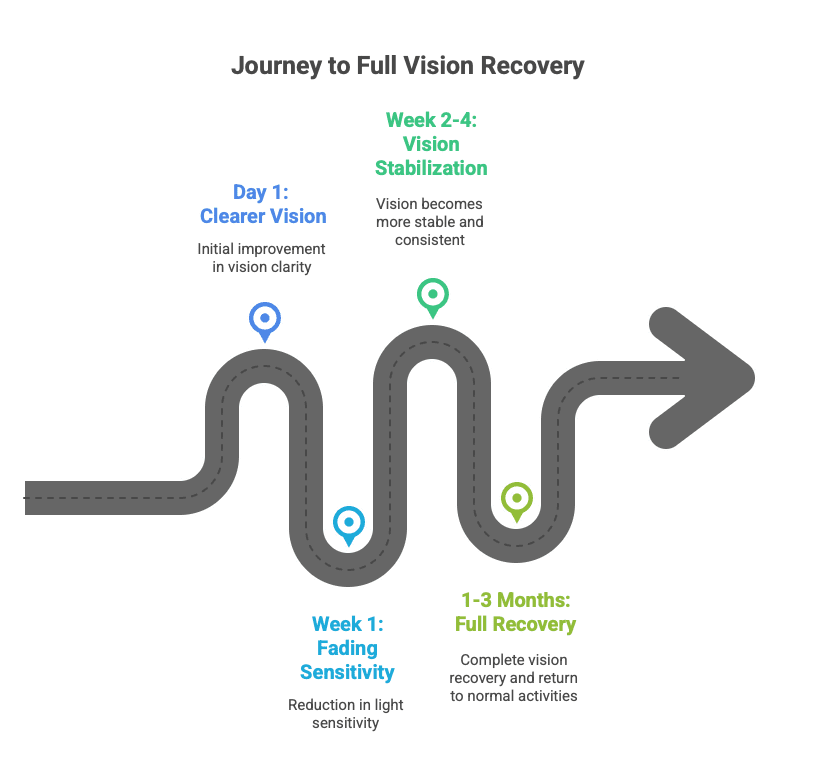
- With traditional cataract surgery, many patients notice improvement in vision within 24 hours. Full stabilisation of vision may take several days to weeks as swelling subsides.
- With laser cataract surgery, recovery tends to be comparable in timeline. Some patients report somewhat faster clarity in the immediate post-operative period due to reduced tissue stress, but overall recovery expectations are similar.
In both methods: you’ll need follow-ups, use prescribed eye drops, avoid heavy lifting or rubbing the eye. Light sensitivity and mild discomfort for a few days are common.
Cost and Insurance Considerations
- Traditional cataract surgery is often more likely to be covered by insurance or public health plans, especially when using standard monofocal lenses.
- Laser cataract surgery tends to cost more because of the extra technology, imaging, and precision. Insurance might cover some aspects, but often not all. Patients need to ask: “Is laser cataract surgery better for me (value-wise)?”
In some areas, laser options are considered premium add-ons; if you select a toric or multifocal IOL with laser assistance, expect to pay more out of pocket.
Also important: insurance schemes may limit lens choices, or the reimbursement may favor traditional methods. You’ll want to check with your provider and the eye center.
Conclusion
Choosing between traditional cataract surgery and laser cataract surgery isn’t about which procedure is universally “better”, it’s about which one is the right fit for you. Both are safe, proven, and capable of restoring clear vision.
The difference between laser eye surgery and cataract surgery methods comes down to precision, cost, and your individual eye health. For some, the advanced accuracy of laser technology offers an advantage, particularly if astigmatism correction or premium lenses are part of the plan. For others, traditional cataract surgery provides excellent results without the added expense.
If you’re wondering, “Is laser cataract surgery better for my eyes?” The best answer comes after a personalized consultation. Statistics may show that more than 95% of patients experience improved vision after cataract surgery, but your own outcome depends on tailoring the procedure to your eyes and your lifestyle.
Your next step: schedule a cataract evaluation at Albemarle Eye Center with locations in Edenton, Kitty Hawk, Kinston, Elizabeth City, and Washington, North Carolina, for your convenience. Bring your questions about laser vs. traditional cataract surgery, explore lens options, and review costs and insurance coverage. The right choice is the one that restores your vision, fits your goals, and lets you move forward with confidence.
**The information offered in this blog is not intended to substitute expert medical advice. Always seek a qualified healthcare professional for any questions or concerns you may have regarding your specific medical condition.**
Frequently Asked Questions (FAQ)
What is traditional cataract surgery?
Traditional cataract surgery involves making a small incision in the cornea by hand, breaking up the cloudy lens with ultrasound, and replacing it with an artificial intraocular lens. This method is highly effective, widely available, and typically covered by insurance.
What is laser cataract surgery?
Laser cataract surgery uses advanced 3D imaging to map the eye and a femtosecond laser to make precise incisions and soften the cataract. This can increase precision, especially for patients with astigmatism or those choosing premium lens implants.
Which method is more precise: traditional or laser?
Laser cataract surgery is generally considered more precise due to computer-guided imaging and laser-created incisions. This can lead to more consistent results, particularly for complex cases or when correcting astigmatism.
Is laser cataract surgery safer than traditional surgery?
Both procedures are very safe and have similar overall risks, such as infection or inflammation. Laser surgery may reduce some risks related to manual incisions, but it also introduces its own rare risks. The safety of either method depends largely on your eye health and your surgeon’s experience.
How fast is recovery after cataract surgery?
Recovery time is similar for both types of surgery. Most patients notice improved vision within 24–48 hours, but full healing can take a few weeks. Both methods require follow-up care and eye drops to support healing.
Which procedure is more expensive?
Laser cataract surgery is usually more expensive due to the cost of advanced technology and imaging. Insurance often covers traditional surgery, but may not pay for the laser portion or premium lenses, leading to higher out-of-pocket costs for laser-assisted surgery.
How do I choose which method is right for me?
The best way to choose is to consult your ophthalmologist. They will consider your eye health, vision goals, budget, and whether you may benefit from the added precision of laser technology. Each patient’s needs are unique, so a personalized approach is best. To get tailored guidance, schedule a consultation with our team today.