
Laser cataract surgery may offer several potential benefits, including improved surgical precision, customized treatment planning, accurate incisions, and assistance with cataract fragmentation. The procedure may also support a smoother recovery experience for some patients. However, visual outcomes depend on several factors, including the selected intraocular lens (IOL), overall eye health, retinal condition, corneal health, and individual healing response.
Table of Contents
Cataracts, a common eye condition that clouds the eye’s lens, affects approximately 24.4 million Americans aged 40 and older, according to the National Eye Institute. Traditionally, cataract removal surgery involved using a handheld blade to create an incision in the eye through which the cloudy lens could be broken up and removed. While effective, there is now an even more precise method for cataract removal: laser cataract surgery.
Laser cataract surgery, a service offered at advanced laser and cataract centers like Albemarle Eye Center, comes with several benefits. For one, it enhances the precision of the procedure by leveraging high-speed imaging and real-time measurements to create a clear and accurate 3D model of the eye. This allows for exact incisions and better lens positioning, improving vision outcomes. Moreover, the laser’s energy reduces the need for ultrasound to break up the lens, lowering the risk of tissue damage and leading to faster recovery times. Laser cataract eye surgery is redefining the path to clearer vision, offering a precise, safe, and quick recovery.
How Does Laser-Assisted Cataract Surgery Work?
Laser cataract surgery, or laser-assisted cataract surgery, is a relatively new technique that uses state-of-the-art femtosecond laser technology. Unlike traditional cataract surgery, which relies on a surgeon’s steady hand to make an incision in the eye, the laser creates a uniform incision.
The technology behind it is truly revolutionary. The femtosecond laser emits pulses at an ultra-fast speed, a feature that allows it to make extremely accurate fragments. These cuts are premeditated based on a 3D image of the eye. This personalized, detailed image of the patient’s eye makes it possible to execute the procedure with extreme accuracy tailored to the person’s unique physiology.
When comparing laser cataract surgery to traditional surgery, laser assistance may provide additional precision during certain steps of the procedure. However, both approaches are established methods of cataract treatment, and the most appropriate option depends on each patient’s eye health, surgical needs, and ophthalmologist’s recommendation. This is because the laser can fragment the cataract into tiny pieces, which are then easily removed, lowering the risk of complications.
Laser-Assisted vs Traditional Cataract Surgery: Key Differences
| Feature | Laser-Assisted Surgery | Traditional Surgery |
| Incision creation | Uses femtosecond laser assistance for certain incisions | Surgeon creates incisions manually |
| Cataract fragmentation | Laser may assist with breaking the cloudy lens into smaller pieces | Uses surgical instruments for lens fragmentation |
| Surgical planning | Uses imaging technology and measurements | Uses surgeon-guided measurements and techniques |
| Recovery experience | Recovery varies based on individual factors | Recovery varies based on individual factors |
| Final vision results | Depends on IOL selection, eye health, and healing | Depends on IOL selection, eye health, and healing |
Steps the ‘Femtosecond Laser’ Can Assist During Surgery
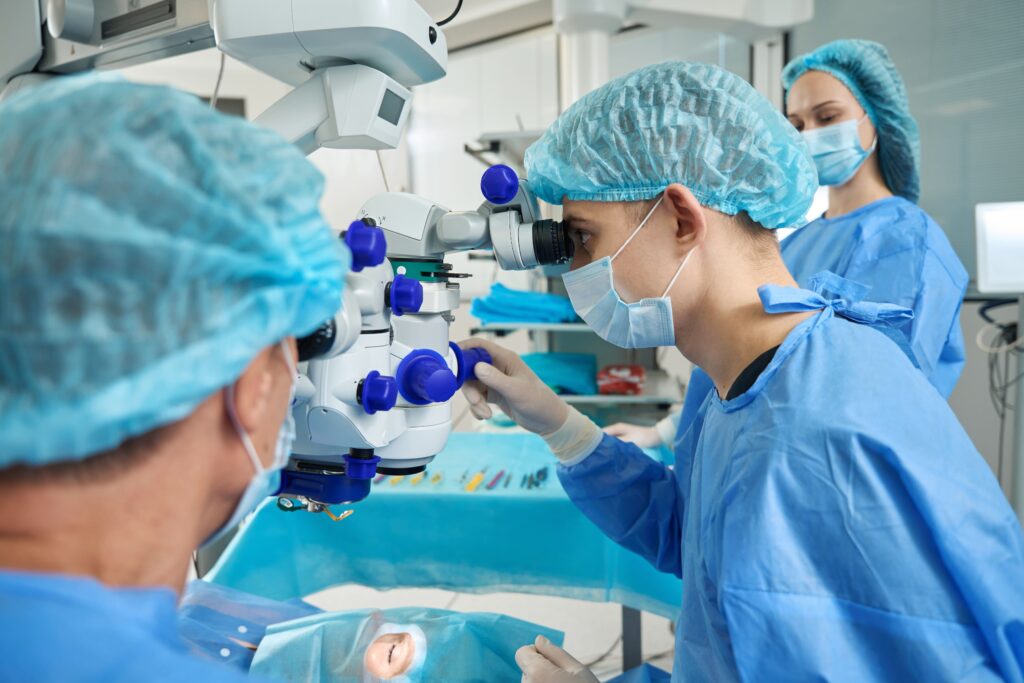
During laser cataract surgery, the laser may assist with several parts of the procedure, including:
- Creating precise corneal incisions
- Making a circular opening in the lens capsule
- Fragmenting the cloudy lens into smaller sections for removal
- Supporting accurate treatment planning through detailed imaging
These steps may help surgeons customize the procedure based on each patient’s unique eye measurements and anatomy.
Can Laser Cataract Surgery Improve Visual Outcomes?
This innovative procedure represents the evolution of ophthalmic technology, with remarkable potential to enhance vision post-surgery. The final visual outcome after surgery depends on more than the surgical technique alone. Factors such as the selected IOL, retinal health, corneal health, existing eye conditions, and individual healing response can influence vision after cataract surgery.
How IOL Selection Influences Vision After Surgery
The intraocular lens (IOL) selected during cataract surgery plays an important role in determining the type of vision correction a patient may experience afterward.
Different IOL options are designed for different visual goals, including distance vision, astigmatism correction, or reducing dependence on glasses for certain activities.
Your ophthalmologist will consider your lifestyle, eye measurements, and overall eye health when discussing available IOL options.
What Is Recovery Like After Laser Cataract Surgery?
Laser cataract surgery recovery varies among patients. Many individuals can return to light daily activities soon after surgery, but complete healing may take several weeks.
Returning to normal activities does not mean the eye has fully healed. Patients should continue following their ophthalmologist’s instructions regarding prescribed medications, eye protection, activity restrictions, and follow-up visits.
Who Might Benefit Most From Laser Assistance?
Laser-assisted cataract surgery may be beneficial for patients who may benefit from additional precision during specific steps of the procedure. It may be considered for patients with:
- Astigmatism correction needs: Laser technology may help create precise corneal incisions that can support astigmatism management in selected patients.
- Specific cataract characteristics: Patients with certain cataract types or densities may benefit from laser-assisted lens fragmentation before removal.
- Complex surgical planning needs: Detailed eye imaging and measurements can help surgeons customize treatment based on individual eye anatomy.
- Specific vision goals: Patients seeking reduced dependence on glasses or improved visual outcomes may discuss whether laser assistance combined with an appropriate IOL option aligns with their goals.
- A need for personalized treatment planning: Patients with unique eye conditions, previous procedures, or specific anatomical considerations may benefit from a detailed evaluation to determine the most suitable surgical approach.
A comprehensive eye examination with an ophthalmologist can help determine whether laser assistance is appropriate based on cataract severity, overall eye health, IOL selection, and individual vision needs.
Potential Limitations and Patient Considerations
While laser-assisted cataract surgery benefits may include increased precision during certain surgical steps, laser assistance may not be necessary or appropriate for every patient.
Factors that may influence treatment decisions include:
- Existing retinal conditions
- Corneal health
- Previous eye surgeries
- Overall medical history
- Individual vision goals
Discussing the pros and cons of laser cataract surgery with your ophthalmologist can help determine the best approach for your eyes.
What Should Patients Consider When Choosing Laser Cataract Surgery?
When it comes to your eyes, you want to ensure that you receive care from the most qualified and experienced professionals. Advanced laser and cataract centers like Albemarle Eye Center are specialized institutions designed to provide comprehensive eye care using the latest technological advancements. Equipped with state-of-the-art femtosecond laser technology, our surgeons offer a level of precision and predictability in cataract surgery that is unmatched by traditional methods.
Our highly skilled and experienced ophthalmologists are dedicated to delivering unparalleled care during every step of your journey, from preoperative consultations to postoperative check-ups. Our center is not only renowned for performing laser cataract surgery but also for our commitment to patient safety and comfort. With personalized treatment plans that cater to each patient’s unique needs, we strive to achieve the best possible outcome for your vision.
Book Your First Appointment
Choosing Albemarle Eye Center means choosing expertise, cutting-edge technology, and a commitment to patient care. With numerous success stories of individuals regaining clear vision and returning to their normal lives faster than they ever thought possible, the decision is clear. Don’t let cataracts cloud your vision of the future. Book an appointment with Albemarle Eye Center today and take the first step towards a brighter tomorrow.
**The information offered in this blog is not intended to substitute expert medical advice. Always seek a qualified healthcare professional for any questions or concerns you may have regarding your specific medical condition.**
Frequently Asked Questions
What are the advantages of laser cataract surgery compared with traditional cataract surgery?
Both laser cataract surgery and traditional cataract surgery are established treatment options. Laser-assisted surgery may offer added precision during certain surgical steps, support customized treatment planning, and assist with cataract fragmentation. However, whether it is the better option depends on the patient’s eye health, cataract characteristics, IOL selection, and individual surgical needs.
Does laser cataract surgery provide faster recovery?
Some patients may experience a smoother recovery after laser cataract surgery, but recovery time varies. Light activities may resume quickly, while complete healing can take several weeks.
Can it reduce dependence on glasses?
Depending on the selected IOL and individual eye characteristics, some patients may experience reduced dependence on glasses after cataract surgery.
Who is a suitable candidate for laser-assisted cataract surgery?
A consultation with an ophthalmologist can determine who is a candidate for laser cataract surgery based on cataract condition, eye measurements, overall health, and vision goals.