
Have you noticed that your eyes feel more sensitive, dry, or uncomfortable during winter after cataract surgery? Winter is a challenging season for eye health, especially for patients recovering from cataract surgery. While cataract surgery is a safe and effective procedure, proper post-operative care is essential for successful healing. Cold temperatures, dry indoor air, reduced humidity, strong winds, and seasonal illnesses can all interfere with the healing process if not managed correctly. This comprehensive guide explains how winter weather affects post-cataract surgery care, the challenges patients commonly face, and how to support safe, steady healing. The goal is to help patients understand cataract surgery recovery in winter and follow the right steps to protect their vision during colder months.
Table of Contents
Winter weather can significantly affect recovery after cataract surgery if proper care is not followed. Cold air, indoor heating, reduced humidity, and seasonal illnesses increase dryness, irritation, and the risk of infection. Patients recovering during colder months must take extra steps to protect healing eyes. Following recommended post-cataract surgery precautions, maintaining consistent medication use, and practicing proper winter eye care after surgery are essential for safe healing. With the right protective measures, lifestyle adjustments, and medical guidance, cataract surgery recovery in winter can remain smooth, comfortable, and successful while supporting long-term vision health.
Cataract surgery is one of the most frequently performed medical procedures in the United States. According to the National Eye Institute, cataracts affect more than 24 million Americans aged 40 and older, and that number continues to grow as the population ages. Cataract surgery restores vision by removing the cloudy lens and replacing it with a clear artificial lens.
Although the procedure itself is quick and highly successful, recovery requires careful attention. Cataract surgery recovery in winter presents specific challenges that are less common during warmer months. Cold air, indoor heating systems, and reduced exposure to natural humidity can increase dryness and irritation in healing eyes.
Understanding winter eye care after surgery allows patients to avoid complications, reduce discomfort, and support long-term vision health. By following proper post-cataract surgery precautions, patients can recover safely and confidently, even in harsh winter conditions.
Common Winter Challenges After Cataract Surgery
Winter introduces environmental factors that directly affect healing eyes. These challenges may seem minor, but they can have a serious impact on healing after cataract surgery in cold weather.
Dry Indoor Air
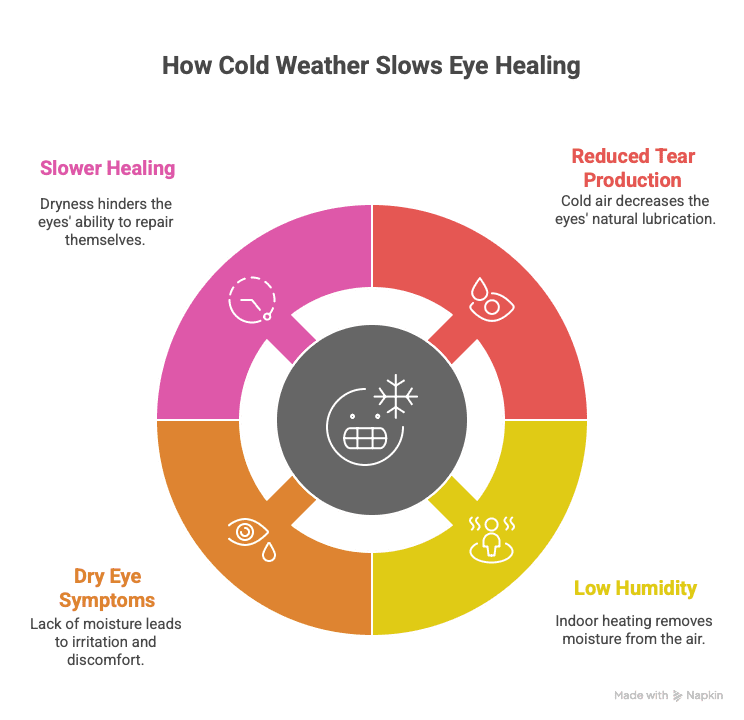
Indoor heating systems significantly reduce humidity levels. Dry air is one of the most common problems during cataract surgery recovery in winter.
Dry indoor air can cause:
- Dry or gritty sensations in the eyes
- Burning or itching
- Redness and irritation
- Temporary blurred vision
After cataract surgery, the eye surface is more sensitive and needs moisture to heal properly. Dry air slows tear production and disrupts the natural tear film, making winter eye care after surgery especially important.
Cold Wind and Outdoor Exposure
Cold winter winds irritate the eyes and increase evaporation of natural tears. Patients recovering from surgery may notice increased tearing, discomfort, or sensitivity to light.
Wind exposure can:
- Increase dryness
- Cause redness
- Delay healing
Protecting the eyes from wind is a key part of post-cataract surgery precautions, particularly during outdoor activities.
Reduced Sunlight and Increased Glare
Although winter days are shorter, sunlight can be harsh due to snow reflection. Snow reflects ultraviolet light, increasing glare and eye strain.
This can:
- Increase light sensitivity
- Cause discomfort in healing eyes
- Slow recovery
These factors make winter cataract surgery tips, such as wearing sunglasses, essential.
Seasonal Illness and Infection Risk
Winter is the peak season for colds, flu, and respiratory infections. According to the Centers for Disease Control and Prevention, flu activity typically increases during the winter months.
Illness can interfere with cataract surgery recovery in winter by:
- Causing missed medication doses
- Delaying follow-up appointments
- Increasing the risk of eye infection from coughing or rubbing
Avoiding illness and maintaining hygiene ar critical parts of winter eye care after surgery.
Protective Measures for Winter Recovery
Protective habits reduce discomfort and support healing after cataract surgery, which may otherwise be complicated by cold weather.
Wearing Sunglasses Outdoors
Sunglasses are not only for summer. During winter, sunglasses provide essential protection by:
- Blocking harmful UV rays
- Reducing glare from snow
- Protecting eyes from the cold wind
Wearing sunglasses outdoors is one of the most effective cataract surgery winter tips for maintaining comfort and protecting healing eyes.
Using Humidifiers Indoors
Humidifiers add moisture to the air, which helps prevent dryness. Eye care specialists often recommend humidifiers during cataract surgery recovery in winter.
Benefits include:
- Improved tear stability
- Reduced irritation
- Increased comfort during sleep
Using a humidifier is a simple but powerful way to support winter eye care after surgery.
Avoiding Direct Heat Exposure
Heaters, fireplaces, and car vents can blow hot air directly into the eyes. This worsens dryness and irritation.
Patients should:
- Avoid sitting close to heaters
- Redirect car vents away from the face
- Maintain balanced room temperatures
These steps support post-cataract surgery precautions and promote steady healing.
Applying Approved Artificial Tears
Artificial tears help maintain eye moisture when natural tear production is reduced. During winter, dryness becomes more severe due to cold air and heating systems.
Patients should:
- Use only doctor-approved eye drops
- Avoid drops with preservatives unless recommended
- Apply drops as directed
Artificial tears are a key part of winter eye care after cataract surgery and help reduce discomfort during recovery.
Practicing Proper Hand and Eye Hygiene
Winter illnesses increase the risk of eye infection. Touching or rubbing the eyes with unclean hands can introduce bacteria.
Patients should:
- Wash your hands frequently
- Avoid rubbing or touching the eyes
- Use clean tissues if needed
Good hygiene supports safe recovery from cataract surgery and lowers infection risk.
Importance of Medication and Follow-Up Appointments
Medication compliance and follow-up care are essential throughout cataract surgery recovery in winter.
Staying Consistent With Prescribed Medications
After surgery, patients are prescribed eye drops to:
- Prevent infection
- Reduce inflammation
- Support healing
Skipping doses increases the risk of complications, especially during the healing period after cataract surgery, especially during cold-weather periods when dryness and irritation are more common.
Patients should:
- Use reminders or alarms
- Keep medications easily accessible
- Continue medications even during holidays or travel
Attending All Follow-Up Appointments
Follow-up visits allow eye doctors and cataract surgeons to monitor healing progress and detect early signs of complications.
According to the American Academy of Ophthalmology, post-surgical follow-up care plays a major role in long-term surgical success.
Missing appointments during cataract surgery recovery in winter can delay treatment and increase risk.
Lifestyle Adjustments for Better Healing
Lifestyle habits strongly influence post-surgery winter eye care.
Limiting Screen Time
Cold weather often leads to increased screen use indoors. Prolonged screen time reduces blinking, which increases dryness.
To support healing after cataract surgery in cold weather:
- Take frequent breaks
- Follow the 20-20-20 rule
- Blink consciously
Avoiding Heavy Lifting and Strenuous Activity
Heavy lifting can raise eye pressure and interfere with healing. During winter, activities such as shoveling snow pose an added risk.
Patients should avoid:
- Shoveling
- Carrying heavy objects
- High-intensity exercise
These precautions protect the eye and align with post-cataract surgery precautions.
Dressing for Cold Weather Protection
Cold air irritates healing eyes. Wearing appropriate winter clothing helps reduce exposure.
Helpful practices include:
- Wearing hats or caps outdoors
- Using scarves to block wind (without covering eyes)
- Avoiding direct exposure during extreme cold
These habits support winter eye care after surgery and reduce discomfort.
Maintaining Proper Hydration
Hydration is often overlooked in winter. Dry indoor air and reduced thirst can lead to dehydration, which affects eye moisture.
Drinking enough water:
- Supports tear production
- Reduces dryness
- Improves overall healing
Proper hydration is essential for a successful recovery from cataract surgery in winter.
Getting Adequate Rest and Sleep
Sleep allows the body to repair itself. Poor sleep can slow healing and increase eye irritation.
Patients should:
- Maintain a regular sleep schedule
- Avoid late-night screen use
- Use a humidifier at night
Rest supports immune function and improves healing after cataract surgery.
Managing Seasonal Illness Proactively
Coughing, sneezing, and illness can disrupt recovery. Preventing illness supports uninterrupted healing.
Patients should:
- Avoid crowded places when possible
- Practice good hygiene
- Stay up to date with vaccinations
Preventing illness helps protect cataract surgery recovery and ensures medications and follow-up care remain consistent.
When to Seek Medical Help
Knowing when to seek care is critical for safe recovery.
Patients should contact their eye doctor immediately if they experience:
- Increasing eye pain
- Sudden vision changes
- Severe redness
- Thick or yellow discharge
- Fever combined with eye discomfort
These symptoms may indicate infection or inflammation that threatens healing after cataract surgery, and they worsen in cold weather.
Early intervention protects vision and prevents permanent damage.
Conclusion: Safe Winter Recovery Supports Long-Term Vision Success
Winter weather requires extra care, but it does not need to delay recovery. With proper planning and attention, cataract surgery recovery in winter can be smooth and successful.
By managing dryness, protecting eyes outdoors, following medication schedules, attending follow-up appointments, and adopting healthy lifestyle habits, patients can support effective healing. Strong winter eye care after surgery practices reduce discomfort and improve outcomes.
Following the recommended cataract surgery winter tips ensures that vision improvements last well beyond the winter season.
At Albemarle Eye Care, we are committed to providing patient-focused eye care using advanced technology and proven surgical techniques. Our experienced doctors deliver personalized treatment plans designed for long-term vision success.
If you are looking for a trusted laser cataract surgery center or expert care in laser cataract eye surgery.
Your vision deserves expert care in every season. If you have questions about post-cataract surgery precautions, winter recovery concerns, or treatment options, the specialists at our advanced laser and cataract center are ready to help.
**The information offered in this blog is not intended to substitute expert medical advice. Always seek a qualified healthcare professional for any questions or concerns you may have regarding your specific medical condition.**
Frequently Asked Questions
Can I go outside in freezing temperatures after cataract surgery?
Yes, you can go outdoors in cold weather after cataract surgery, but you should take precautions. Protect your eyes from cold wind and sudden temperature changes by wearing wraparound sunglasses and a hat or scarf. Limit your time outside during extreme cold, and avoid activities that could expose your eyes to blowing snow or debris. Always follow your surgeon’s specific recommendations.
Will indoor heating make my eyes feel worse after surgery?
Indoor heating can dry out the air, which often increases eye dryness and irritation during recovery. To counteract this, use a humidifier to add moisture to the air, avoid sitting directly in front of heaters or vents, and apply artificial tears as recommended. These steps help maintain eye comfort and support healing.
Is it safe to travel during winter while recovering from cataract surgery?
Travel is generally safe after cataract surgery if your doctor approves, but winter travel requires extra planning. Cold air, dry environments, and crowded places can increase the risk of dryness and illness. Bring all prescribed eye drops; use lubricating drops as needed; protect your eyes from wind and sun; and avoid rubbing your eyes. Schedule follow-up appointments before leaving town and inform your doctor about your travel plans.
How can I tell if my winter eye discomfort is normal or a sign of a problem?
Mild dryness, light sensitivity, and occasional irritation are common during winter recovery. However, you should contact your eye doctor if you experience increasing pain, sudden vision changes, persistent redness, thick discharge, or swelling. These symptoms may signal infection or other complications that require prompt attention.
Do I need to change my diet during winter recovery to help my eyes heal?
While there is no special winter diet for cataract surgery recovery, staying hydrated and eating a balanced diet rich in vitamins A, C, and E can support healing. Include leafy greens, carrots, citrus fruits, and fish in your meals. Drinking enough water is especially important in winter, as dry air can lead to dehydration and worsen eye dryness.