
Reviewed By: Dr. Peter V. Mitrev, M.D
Table of Contents
Have you ever wondered if there is more to glaucoma treatment than just eye drops every morning or surgery? You are not alone. Millions of Americans ask this exact question every year and the answer may surprise you.
Glaucoma is one of the leading causes of permanent blindness in the United States. According to the CDC, more than 3 million Americans have glaucoma, yet nearly half do not know it. The condition quietly steals your vision before you ever feel a symptom. That is what makes it dangerous and that is exactly why understanding all available treatment paths matters so much.
Whether you are newly diagnosed, managing a long-term condition, or simply researching alternative treatments for glaucoma for a loved one, this post will give you practical, medically grounded information to help you make better decisions.
What Is Glaucoma and Why Treatment Matters
Glaucoma is not a single disease. It is a group of eye conditions that damage the optic nerve, the cable that sends visual signals from your eye to your brain. In most cases, this damage happens because pressure inside the eye (called intraocular pressure, or IOP) builds up over time. Once the optic nerve is damaged, that vision loss cannot be reversed.
This is one of the most important facts to understand about glaucoma: there is no cure, only management. The goal of every treatment, conventional or alternative, is to slow or stop the damage, not undo it. That is why early action is everything.
How Eye Pressure Damages Vision
Your eye constantly produces a fluid called aqueous humor. Normally, this fluid drains out at the same rate it is produced, keeping eye pressure stable. In glaucoma, this drainage system becomes blocked or inefficient. Pressure builds. Over time, that pressure compresses the optic nerve fibers much like stepping on a garden hose until it kinks and flow stops.
The peripheral vision goes first. Because this happens so gradually, most people do not notice until 40% or more of their optic nerve is already damaged. By the time central vision is affected, significant and irreversible harm has occurred.
Quick Fact: Normal intraocular pressure is generally between 10 and 21 mmHg. Glaucoma-related damage can occur even within this range in some patients, a condition called normal-tension glaucoma.
Importance of Early Treatment
Early glaucoma treatment is not just recommended, it is vision-saving. Studies show that lowering IOP by just 25% can reduce the risk of vision loss progression by nearly half. The earlier treatment begins, the more optic nerve function is preserved.
Waiting because symptoms are absent is the most common and costly mistake patients make. A comprehensive dilated eye exam is currently the only reliable way to detect glaucoma early. The National Eye Institute recommends regular eye exams starting at age 40 for most adults, and earlier for those with a family history of glaucoma or other risk factors.
Standard Glaucoma Treatments
Before exploring what lies beyond conventional care, it helps to understand what conventional care actually includes because some patients misunderstand or underestimate it.
Eye Drops
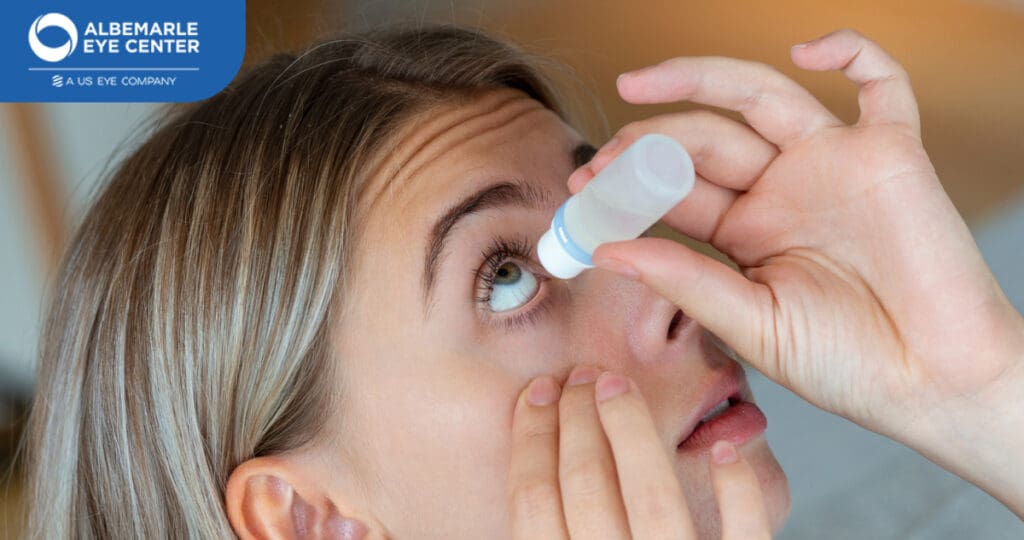
Prescription eye drops remain the most common first-line treatment for glaucoma. They work either by reducing how much fluid your eye produces or by improving how well it drains. Most patients start here. The challenge is adherence, research shows that up to 50% of glaucoma patients do not take their drops as prescribed, which is a leading cause of disease progression.

Laser Therapy
Selective Laser Trabeculoplasty (SLT) uses targeted light energy to improve drainage through the eye’s trabecular meshwork. It is performed in an office setting, takes about 5 minutes per eye, and has no incision, no stitches, and minimal downtime.
A landmark 2019 study published by the National Institute for Health Research in the UK found that SLT was as effective as eye drops for initial glaucoma treatment in many patients, with better long-term adherence rates.
Surgical Options
Traditional glaucoma surgery such as trabeculectomy, creates a new drainage channel for fluid. It is highly effective but reserved for cases where drops and laser treatment have not controlled pressure adequately. Recovery is longer and more involved, and it carries risks of infection, scarring, and vision fluctuation.
Alternative and Emerging Treatments for Glaucoma
This is where the field of ophthalmology has evolved significantly in recent years. There are now several alternative and emerging treatments for glaucoma that sit between eye drops and traditional surgery offering meaningful options for patients who are not ideal candidates for either extreme.
Minimally Invasive Glaucoma Surgery (MIGS)
MIGS represents one of the most significant advances in glaucoma care in the last two decades. These are surgical procedures, but they are far less invasive than traditional glaucoma surgery. They use microscopic tools and tiny incisions, often performed at the same time as cataract surgery.
Common MIGS procedures include iStent (a tiny titanium device implanted in the eye’s drainage canal), Kahook Dual Blade (which removes part of the trabecular meshwork), and Hydrus Microstent (a scaffold that expands the Schlemm’s canal). MIGS procedures generally offer shorter recovery, lower complication rates, and reduced need for eye drops post-procedure, making them attractive for appropriate patients with mild to moderate glaucoma.
Tip for Patients: If you are scheduled for cataract surgery and also have glaucoma, ask your surgeon specifically whether a MIGS procedure can be combined in the same operation. This is increasingly common and may significantly reduce your need for ongoing medications.
Laser-Based Treatments
Beyond SLT, other laser-based glaucoma treatments are advancing. Micropulse Laser Trabeculoplasty (MLT) uses pulsed laser energy to avoid thermal damage to surrounding tissue while still improving drainage. Transscleral Cyclophotocoagulation (TSCPC) targets the eye’s fluid-producing cells to reduce production, now available in a gentler form called MicroPulse TSCPC that preserves more surrounding tissue.
These options represent true non surgical treatment for glaucoma in many cases, with patients maintaining vision and IOP control without going to an operating room.
New Drug Delivery Systems
Remembering to take eye drops twice daily — every day, for life — is genuinely hard. The pharmaceutical industry has responded with sustained-release drug delivery implants.
The Durysta implant (bimatoprost intracameral implant), approved by the FDA, is a tiny dissolvable rod inserted into the eye that releases medication over several months. Clinical trials showed it maintained IOP reduction comparable to daily eye drops without the burden of daily dosing.
Ongoing research is also investigating contact lenses that deliver glaucoma medications continuously, a potential game-changer for adherence.
Natural and Lifestyle-Based Approaches
Many patients search for how to reduce eye pressure naturally — and while lifestyle alone cannot replace clinical treatment for most glaucoma patients, certain evidence-based habits can meaningfully support overall eye health and even modestly influence IOP.
Diet and Nutrition
What you eat can influence your eye pressure and optic nerve health more than most people realize. Here is what the research points to:
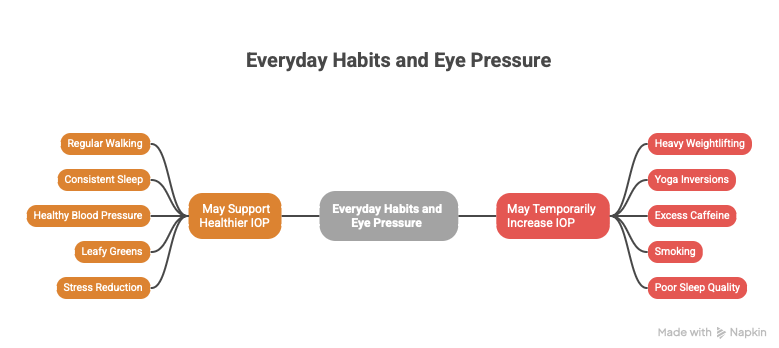
- Leafy greens like spinach and kale are high in dietary nitrates, which convert to nitric oxide in the body and help regulate blood flow to the optic nerve. A study in JAMA Ophthalmology linked high leafy green intake to a 20–30% lower glaucoma risk.
- Omega-3 fatty acids (fatty fish, flaxseed, walnuts) may reduce inflammation and support optic nerve health.
- Antioxidant vitamins — A, C, and E — found in colorful fruits and vegetables help protect eye cells from oxidative stress damage.
- Caffeine caution: Coffee and caffeinated drinks can temporarily raise IOP. If your pressure is borderline, discuss your daily caffeine intake with your doctor.
Exercise and Eye Pressure
Aerobic exercise — walking, cycling, swimming — has been shown in multiple studies to modestly lower intraocular pressure.
A study in the British Journal of Ophthalmology found that regular aerobic activity was associated with lower IOP and reduced glaucoma risk. Exercise is thought to help by improving aqueous humor drainage and enhancing optic nerve blood flow.
However, not all exercise is equal for glaucoma patients. High-intensity resistance training (like heavy weightlifting) and certain yoga inversions (head-below-heart poses) can temporarily spike eye pressure. Patients should consult their eye care provider before beginning any new exercise routine.
Tip: Aim for at least 30 minutes of moderate aerobic exercise on most days of the week. Even consistent walking has shown measurable IOP-lowering effects in some studies.
Stress and Eye Health
Psychological stress affects the entire body including eye pressure. Stress activates the sympathetic nervous system, which can raise IOP. Chronic stress may also impair blood flow to the optic nerve, compounding damage risk.
Mindfulness practices, structured sleep routines, and controlled breathing exercises have been studied for their potential to lower sympathetic nervous system activity and, by extension, support stable IOP. While this is not a substitute for medical treatment, stress management is a legitimate and underutilized component of holistic glaucoma care.
Can You Treat Glaucoma Without Surgery?
This is one of the most searched questions about glaucoma and the honest answer depends entirely on the individual patient’s disease stage, IOP levels, optic nerve status, and how well they respond to non-surgical options.
When Non-Surgical Options Work
For patients with early-stage open-angle glaucoma and mildly elevated pressure, non surgical treatment for glaucoma is often both appropriate and effective. Eye drops, SLT laser therapy, and sustained-release drug implants can control pressure adequately for years without surgical intervention. Regular monitoring every 3 to 6 months is essential to confirm the chosen approach is working.
Glaucoma treatment without surgery is also appropriate for patients with normal-tension glaucoma, where the goal is optimizing optic nerve blood flow and minimizing other risk factors rather than dramatically lowering IOP.
Limitations of Alternative Treatments
Natural remedies for glaucoma, herbal supplements, homeopathic treatments, dietary protocols, have not been proven in large clinical trials to control glaucoma on their own.
- No supplement has been shown to replace medically supervised treatment
- Glaucoma is painless — patients may feel completely fine while optic nerve damage quietly progresses
- Relying solely on natural remedies for glaucoma without medical oversight is a serious risk
- Any lifestyle or natural approach must work alongside a physician-supervised plan, not replace it
Combining Treatments for Better Outcomes
The most effective glaucoma management is almost never a single approach. It is a layered strategy tailored to the patient and this is where personalized ophthalmology care makes a real difference.
Cataract + Glaucoma Combined Procedures
Cataracts and glaucoma frequently coexist in older adults. Rather than two separate surgeries, a combined procedure — cataract removal with simultaneous MIGS implantation has become a widely accepted approach. This not only addresses both conditions in one operation but also often reduces the need for glaucoma eye drops post-surgery, improving quality of life significantly.
Personalized Treatment Plans
There is no universal formula for glaucoma management. A 55-year-old with early open-angle glaucoma, normal blood pressure, and excellent drop adherence will have a very different plan than a 70-year-old with moderate glaucoma, dry eyes that make drops uncomfortable, and cataracts forming.
An experienced glaucoma specialist will factor in: IOP targets, optic nerve appearance, visual field loss progression rate, patient lifestyle, tolerance to medications, and surgical risk before recommending a course of action. The right plan is the one that matches both the disease and the person living with it.
Risks of Delaying Proper Treatment
Delayed glaucoma treatment has one irreversible consequence, permanent vision loss. Damaged optic nerve fibers do not regenerate. Every day of uncontrolled pressure means more cumulative damage.
Common reasons patients delay and why each is costly:
- Fear of surgery — Many effective options today require no operating room at all
- Cost concerns — Early treatment is far less expensive than advanced-stage intervention
- Relying on unproven natural remedies for glaucoma — Feeling fine does not mean the nerve is safe; glaucoma is painless until significant damage is done
When to See an Eye Specialist
If any of the following apply to you, schedule a comprehensive dilated eye exam as soon as possible:
- Family history of glaucoma
- Age 60 or older (or 40+ if you are of African-American or Hispanic descent)
- Diabetes, high blood pressure, or a history of eye injury
- No full dilated eye exam in the past two years
- Gradual narrowing of side vision or unexplained blurring
Seeing a glaucoma specialist gives you access to advanced imaging like OCT (optical coherence tomography), technology that can detect optic nerve damage years before symptoms appear. Caught early, glaucoma treatment without surgery has its best chance of success.
Key Takeaways
- Glaucoma is permanent vision loss in progress but it is manageable with early diagnosis and consistent treatment.
- Alternative treatments for glaucoma now include MIGS procedures, advanced laser options, and sustained-release drug delivery, offering real choices beyond daily drops or traditional surgery.
- Lifestyle changes including a nitrate-rich diet, aerobic exercise, and stress management can support IOP control but cannot replace medical treatment.
- Natural remedies for glaucoma have not been clinically proven to adequately control the disease on their own, use them alongside, never instead of, professional care.
- The worst outcome in glaucoma is always the same: doing nothing. Early action is the most powerful tool you have.
Conclusion
Glaucoma care has changed dramatically and patients today have more options than ever before. The old binary of “drops or surgery” is being replaced by a much more nuanced, personalized approach that includes minimally invasive procedures, laser therapies, lifestyle optimization, and emerging drug delivery systems. That is genuinely good news.
But none of these options work without one essential first step: seeing a qualified eye care specialist who can assess your specific condition, stage your disease accurately, and help you understand every path available to you.
If you have been living with glaucoma for years or are newly facing this diagnosis, the best move you can make today is not a supplement or a diet change, it is a conversation with an experienced ophthalmologist who specializes in glaucoma.
Frequently Asked Questions
Can glaucoma worsen even if I am using my eye drops as prescribed?
Yes. Eye drops do not work equally for every patient. Some develop tolerance, others have absorption issues, and many experience undetected nighttime pressure spikes. Without regular follow-up and IOP monitoring at different times of day, it is impossible to confirm your current treatment is truly working.
Is there a genetic test for glaucoma risk?
No reliable commercial genetic test currently exists for glaucoma. However, having a first-degree relative with glaucoma raises your lifetime risk significantly — the NEI estimates four to nine times higher. If multiple family members are affected, genetic counseling is available and routine eye exams become especially important.
Can children or young adults develop glaucoma?
Yes. Congenital and juvenile-onset glaucoma affect children and young adults, often due to abnormal drainage development in the eye. Adults under 40 with elevated IOP or a strong family history are also at risk. Early diagnosis is critical — damage at any age is permanent and irreversible.
Does wearing glasses or contact lenses affect glaucoma progression?
Standard glasses and contacts do not affect glaucoma progression. However, orthokeratology lenses and some extended-wear contacts can alter corneal thickness measurements, which factor into glaucoma risk assessment. Always inform your ophthalmologist about every type of lens you use to ensure accurate testing and diagnosis.
How often should I get my eyes checked if I am at risk for glaucoma but have not been diagnosed?
The American Academy of Ophthalmology recommends a complete eye exam every one to two years for high-risk individuals. Multiple risk factors — such as age, family history, or elevated IOP — warrant annual exams. Your ophthalmologist can set a personalized monitoring schedule based on your specific risk profile.
Are You Ready to Explore Your Glaucoma Treatment Options With a Specialist Who Truly Understands Your Eyes?
At Albemarle Eye Care, our specialists are experienced in the full spectrum of glaucoma care from early monitoring and lifestyle guidance to advanced laser treatments and minimally invasive surgical procedures. We serve patients across eastern North Carolina, with locations in Washington, Elizabeth City, Edenton, Kinston, and Kitty Hawk.
Contact us today to schedule your comprehensive glaucoma evaluation because protecting what you can see right now is the most important investment you will ever make.
**While alternative treatments and lifestyle changes may assist with overall health and provide potential adjunctive benefits, evidence for their direct impact on managing glaucoma remains variable. Always consult with a healthcare provider before starting any new treatment or supplement regimen.**