Are your eyes already itchy, watery, and irritated this spring, and now you are wondering whether surgery should wait?
Table of Contents
That question matters more than many patients realize. Seasonal allergies do not usually cancel a procedure on their own, but active inflammation on the eye surface can affect comfort, healing, and sometimes even the measurements used to plan treatment. This is especially important if you are considering eye surgery during allergy season, or if you are worried that your LASIK recovery may be affected by your allergies.
The good news is that many patients can still move forward safely when symptoms are identified early and managed appropriately. The key is not to guess. It is to understand what allergies are doing to your eyes, how that changes surgery planning, and when your doctor may recommend waiting for a better window.
How Do Spring Allergies Affect Your Eyes?
Spring allergies often trigger allergic conjunctivitis, an inflammation of the eye surface and eyelids. This can cause itching, redness, tearing, swelling, and temporary blur. These symptoms may seem minor, but they matter when your eyes need to be calm and stable for surgery.
When pollen reaches the eye, the immune system can respond by releasing histamine and other inflammatory chemicals. That reaction can make the conjunctiva and eyelids red, swollen, itchy, and watery. Many people also notice burning, a gritty feeling, light sensitivity, and temporary blurry vision. In plain terms, the eye surface becomes irritated and unstable, which is the opposite of what surgeons want before or right after a procedure.
This is also why eye rubbing becomes such a problem. Itching makes patients want to rub their eyes, but rubbing can worsen inflammation, increase surface irritation, and raise the risk of problems after surgery. If your eyes are already inflamed before surgery day, that irritation can carry into recovery and make healing less comfortable.
Quick Fact: If allergy symptoms come with severe pain, major light sensitivity, or lasting vision changes, doctors advise evaluation by an eye specialist because those signs may suggest something more than simple allergy irritation.
Can Allergies Really Interfere With Eye Surgery?
Yes, allergies can interfere with surgery planning and recovery, but they rarely rule surgery out completely. The main concern is not the allergy label itself. The main concern is active itching, redness, tearing, dryness, and inflammation when the eye needs to be stable.
Most patients with seasonal allergies can still have surgery, but active symptoms can make the process harder. Surgeons are often more concerned about the condition of the eye surface than about the calendar season.
If the eye is red, watery, unstable, or very dry, that can affect preoperative measurements and make recovery more irritating. This matters in both spring allergies and eye surgery planning, and in decisions about cataract surgery with allergies.
The practical issue is inflammation. A healthy ocular surface helps surgeons get accurate measurements and helps patients tolerate healing drops, light sensitivity, and early recovery restrictions. An inflamed surface can do the opposite. It can increase discomfort, trigger more rubbing, and make it harder to distinguish between normal healing and allergy flare symptoms.
Another issue is medication overlap. Some oral antihistamines can worsen dryness, which may already be present before surgery or become more noticeable after procedures. That does not mean patients must stop treatment on their own. This means the medication plan should be reviewed with the surgeon in advance.
Tip: Do not wait until the day before surgery to mention allergies. Telling your eye doctor early gives them time to calm the surface, adjust drops, and decide whether the timing is still right.
Does Allergy Season Affect LASIK and Cataract Surgery in the Same Way?
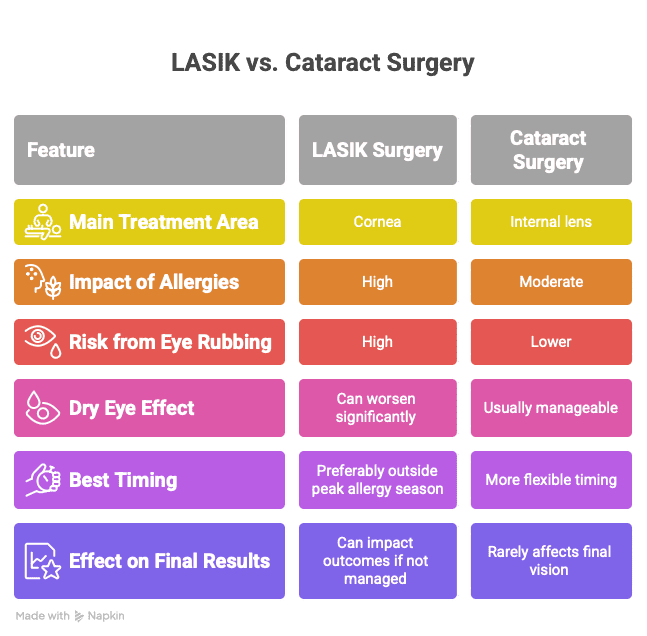
Allergy season affects LASIK and cataract surgery differently because each procedure interacts with the eye differently. LASIK is more sensitive to surface irritation, while cataract surgery is less affected internally. Understanding these differences helps patients plan better.
Allergy season does not impact all eye procedures equally. The key difference lies in where the surgery is performed and the extent of involvement of the eye surface.
Why LASIK Is More Affected by Allergies
LASIK directly reshapes the cornea, which is the outer surface of the eye. This makes it more sensitive to allergy-related symptoms.
During LASIK recovery, the following risks increase:
- Eye rubbing can dislodge the corneal flap
- Inflammation can delay healing
- Dry eye symptoms can become worse
- Itching can lead to discomfort and complications
Because of this, surgeons are more cautious when planning LASIK during peak allergy periods.
Why Cataract Surgery Is Less Affected
Cataract surgery focuses on replacing the eye’s natural lens. This means:
- The main procedure happens inside the eye
- Surface irritation has less impact on surgical success
- Vision outcomes are usually not affected by mild allergies
However, surface symptoms like dryness or irritation can still affect comfort and pre-surgery measurements in cataract surgery with allergies.
When Should You Delay Eye Surgery Because of Allergies?
Eye surgery may need to be delayed if allergy symptoms are active and affecting the eye surface. The goal is to ensure stable, calm eyes for accurate treatment and smooth recovery.
Should Consider Delaying If:
- Eyes are itchy, red, swollen, or watery
- You have active allergy flare-ups
- There is persistent dry eye affecting comfort
- You feel a strong urge to rub your eyes frequently
- Vision is temporarily blurry due to inflammation
Why Delaying Can Be Safer
- Improves the accuracy of pre-surgery measurements
- Reduces risk of post-surgery irritation and infection
- Helps ensure better healing and comfort
- Prevents complications from eye rubbing
When You Can Still Proceed
- Symptoms are mild and controlled
- You are using a stable allergy treatment
- The eye surface appears healthy on examination
How Can You Prepare for Surgery During Allergy Season?
Preparation during allergy season is about calming the eye surface before surgery. Good planning includes controlling itch, redness, and dryness early, reducing allergen exposure, and reviewing all medications with your surgeon. This helps improve comfort and reduces surprises during recovery.
Control Allergies Early (Do Not Wait)
- Start treatment before symptoms become severe
- Use artificial tears to flush out allergens
- Follow the prescribed antihistamine or allergy drops
- Keep your eyes stable before surgery day
Reduce Pollen Exposure Daily
- Keep windows closed during high pollen days
- Use air conditioning or air filters
- Wear sunglasses outdoors to block allergens
- Avoid going out during peak pollen times
Avoid Eye Irritation Triggers
- Never rub your eyes (critical for surgery safety)
- Use a cold compress to relieve itching
- Keep your hands clean and away from your eyes
- Limit exposure to dust, smoke, and wind
Review All Medications with Your Doctor
- Inform about:
- Oral antihistamines
- Allergy eye drops
- Nasal sprays
- Some medications may:
- Increase dryness
- Affect healing
- Follow only doctor-approved adjustments
Follow Pre-Surgery Instructions Strictly
- Stop wearing contact lenses as advised
- Avoid eye makeup, creams, and perfumes
- Keep eyelids clean before the procedure
- Follow all clinic guidelines carefully
Tip: The best time to discuss seasonal allergies is at the first consultation, not after your surgery date is already locked in. Early planning gives your surgeon more options.

How Should You Manage Allergies After Eye Surgery?
After surgery, allergy care must reduce symptoms without disturbing healing. The number one rule is simple: do not rub your eyes. The rest of the plan usually focuses on lubrication, protection, hygiene, and the use of only surgeon-approved medications.
Protect Your Eyes First
- Never rub your eyes — even if itching feels intense
- Rubbing can damage healing tissue or disrupt surgical results
- Use a cold compress (closed eyes only) for safe relief
Control Itching and Dryness Safely
- Use preservative-free artificial tears regularly
- Helps flush allergens and reduce dryness
- Expect more sensitivity with LASIK recovery and allergies
Use Medications Carefully
- Only use doctor-approved allergy eye drops
- Avoid random “redness relief” drops
- If using multiple drops, keep a 10–15 minute gap between each
Reduce Allergen Exposure
- Keep windows closed during high pollen days
- Wear sunglasses outdoors
- Avoid dust, smoke, and windy environments
Maintain Clean Surroundings
- Wash your hands frequently before touching your eyes
- Change pillowcases often
- Rinse face and hair after outdoor exposure
Watch for Warning Signs
- Contact your doctor immediately if you notice:
- Increasing pain
- Blurry or worsening vision
- Excess discharge
- Unusual irritation
Read Also: What Eye Drops Are Best After Laser Cataract Surgery?
When Should You Talk to Your Eye Doctor Before Surgery?
You should talk to your doctor about allergies as early as possible, ideally at least 4 weeks before surgery. Early communication helps the team improve measurements, control inflammation, and reduce recovery problems. It is one of the easiest ways to protect your surgical result.
Bring up allergies at the first consultation if you have a history of itchy eyes, seasonal hay fever, swelling around the eyes, or frequent use of allergy medications. Mention whether symptoms are occasional, daily, or worse at certain times of year. That information helps the doctor judge whether you are dealing with mild seasonal irritation or a more chronic ocular surface problem.
It is especially important to call the office again if symptoms flare up 1 to 2 weeks before surgery. A patient who looked stable at the first visit may need a different plan if pollen counts spike and the eyes become red or watery right before the procedure.
Key Takeaways
- Spring allergies usually do not disqualify you from surgery, but active inflammation can affect comfort, healing, and pre-op accuracy.
- LASIK is generally more sensitive to allergy-related itching, rubbing, and dryness because it directly involves the corneal surface.
- Cataract surgery is often less affected by mild seasonal symptoms, but surface dryness and irritation still need attention.
- The best preparation is early allergy control, reduced pollen exposure, no eye rubbing, and a medication review with your surgeon.
- After surgery, use only approved drops, protect the eyes from allergens, and call your doctor if symptoms become severe or unusual.
Conclusion
Seasonal allergies can absolutely complicate planning, but they do not automatically mean you must postpone surgery. The real issue is whether your eyes are calm enough for accurate testing and comfortable healing. If your symptoms are controlled, many patients can proceed safely. If your eyes are red, itchy, watery, or very dry, waiting a little longer may protect the result and make recovery much easier. That is the difference between rushing into a date on the calendar and choosing the right time for your eyes.
Albemarle Eye Center is an advanced eye care and surgery center offering LASIK, routine exams, contact lens fittings, glaucoma treatment, and other vision services. We are also located in Washington, Elizabeth City, Edenton, Kinston, and Kitty Hawk, North Carolina, giving patients across the region access to evaluation and follow-up care.
When surgery planning needs to account for allergy season, that combination of local access and specialty care matters.
Frequently Asked Questions
Can someone have cataracts and macular degeneration at the same time?
Yes. Many older adults develop multiple age-related eye conditions simultaneously, which is why professional diagnosis is important.
Are cataracts preventable?
While aging is the main cause, wearing sunglasses, managing diabetes, and avoiding smoking may reduce risk.
Can macular degeneration be cured?
There is currently no cure for the dry form, but treatments can slow progression and preserve vision.
Does presbyopia continue to worsen over time?
Yes. Presbyopia gradually progresses until about age 65, when focusing ability stabilizes.
How often should adults over 60 get eye exams?
Most experts recommend yearly exams to detect early signs of vision loss.