
Glaucoma is one of the leading causes of irreversible vision loss worldwide, yet many people do not realize they have it until noticeable vision changes occur. Often called the “silent vision thief,” glaucoma can gradually damage the optic nerve without causing obvious symptoms in its early stages.
Table of Contents
Understanding how glaucoma develops, recognizing possible warning signs, and learning about available treatment approaches can help patients make informed decisions about their eye health. Regular eye exams, eye pressure monitoring, and ongoing care with an eye specialist are important for protecting vision and managing glaucoma over time.
This guide explains how glaucoma develops, how open-angle glaucoma progression occurs, when medications may no longer be enough, and when to get glaucoma surgery.
What Is Glaucoma and How Does It Affect Vision?
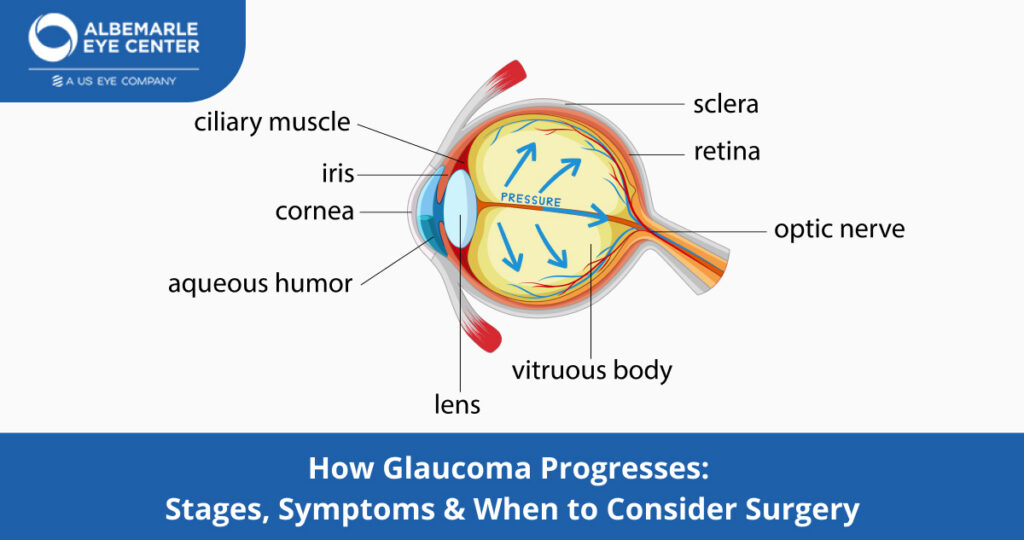
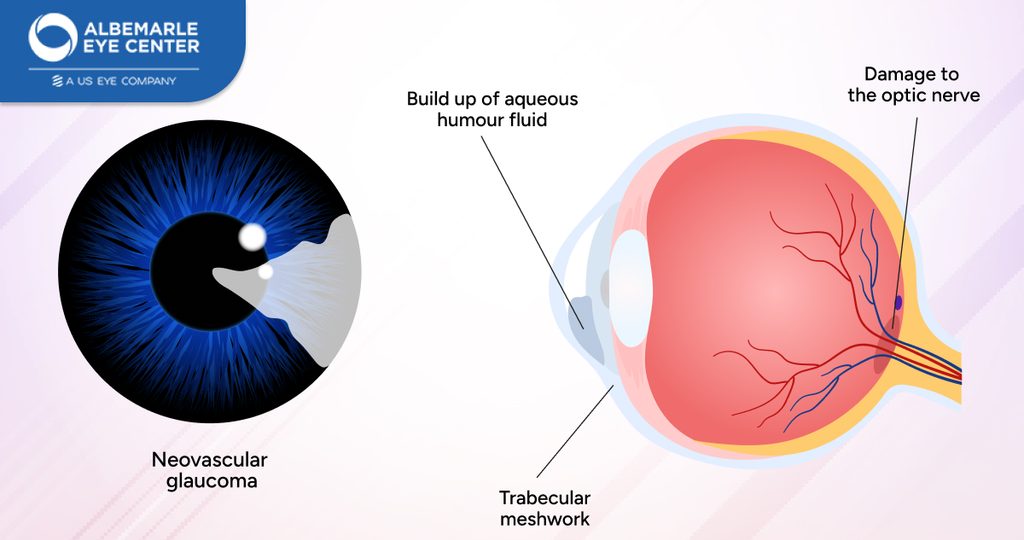
Glaucoma is a group of eye diseases that cause damage to the optic nerve, which connects the eye to the brain. The optic nerve sends visual information from the eye, allowing the brain to process what we see.
In many cases, glaucoma is associated with increased pressure inside the eye, known as intraocular pressure (IOP). Over time, increased pressure or other factors may contribute to optic nerve damage.
According to the National Eye Institute (NEI), glaucoma can lead to vision loss when optic nerve damage progresses and is not treated. Early detection through comprehensive eye examinations can help identify changes before significant vision loss occurs.
Why Glaucoma Is Called the “Silent Vision Thief”
One of the biggest challenges with glaucoma is that it often develops slowly and without noticeable warning signs.
Many people with early glaucoma experience:
- No eye pain
- No obvious changes in vision
- No difficulty with daily activities
This means glaucoma may continue progressing without a person realizing there is a problem.
The most common type, open-angle glaucoma, typically develops gradually. Peripheral (side) vision is often affected first, while central vision may remain clear during the early stages.
This is why routine eye exams are important, especially for individuals with risk factors such as:
- Increasing age
- Family history of glaucoma
- Elevated eye pressure
- Certain medical conditions
- Previous eye injuries
What Doctors Look for During a Glaucoma Evaluation
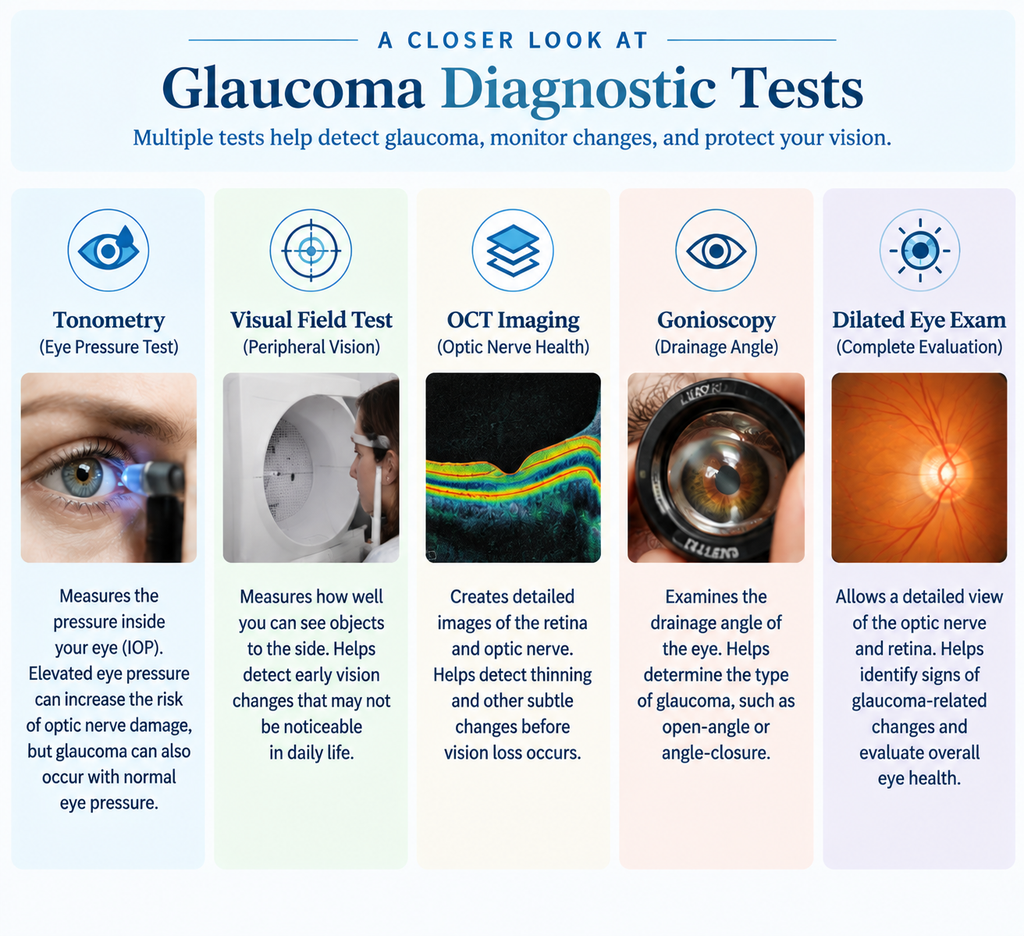
A glaucoma evaluation involves more than checking eye pressure. Because glaucoma affects the optic nerve and visual field, ophthalmologists use multiple tests to understand how healthy your eyes are and whether changes are occurring over time.
During an evaluation, your eye doctor may assess:
Eye Pressure Measurement (Tonometry)
Tonometry measures the pressure inside your eye, also known as intraocular pressure (IOP).
Elevated eye pressure can increase the risk of optic nerve damage, but glaucoma can also occur in people with normal eye pressure. This is why doctors consider eye pressure along with other test results.
Optic Nerve Examination
The optic nerve is carefully examined for signs of glaucoma-related changes.
Doctors look for:
- Changes in optic nerve appearance
- Thinning of nerve tissue
- Signs of progressive damage
Visual Field Testing
A visual field test measures how well you can see objects in your peripheral (side) vision.
Because glaucoma often affects peripheral vision first, this test helps doctors identify areas where vision may be changing.
Optical Coherence Tomography (OCT)
OCT is a noninvasive imaging test that creates detailed images of structures inside the eye.
Doctors use OCT to evaluate:
- Retinal nerve fiber layer thickness
- Optic nerve health
- Subtle changes that may occur before noticeable vision loss
Gonioscopy
Gonioscopy allows doctors to examine the drainage angle of the eye.
This helps determine whether someone has:
- Open-angle glaucoma
- Angle-closure glaucoma
Understanding the type of glaucoma helps guide treatment decisions.
Stages of Glaucoma Progression
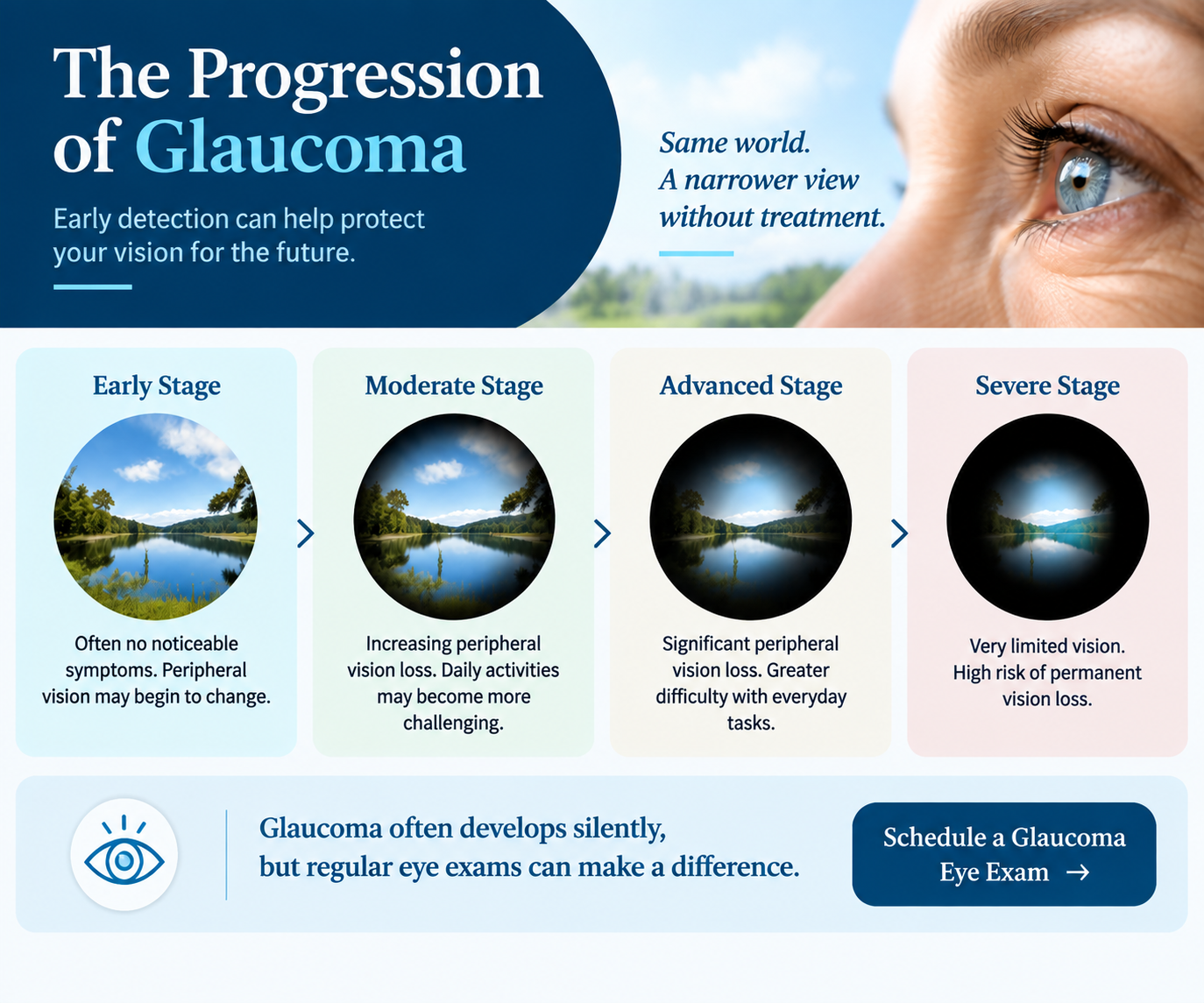
Glaucoma progression is generally described based on the amount of optic nerve damage and vision changes.
Stage 1: Early Glaucoma
During early glaucoma, optic nerve damage may already be present, but symptoms are usually minimal or absent.
Common characteristics:
- Mild optic nerve changes
- Possible loss of peripheral vision
- Normal daily activities may not be affected
- Eye pressure may or may not be elevated
Because symptoms can be difficult to notice, a glaucoma eye exam is often the first way the condition is detected.
Early glaucoma symptoms may include:
- Slight difficulty seeing objects to the side
- Trouble adjusting between bright and dark environments
- Occasional blurred vision
However, many patients have no noticeable symptoms.
Stage 2: Moderate Glaucoma and Vision Changes
As glaucoma progresses, optic nerve damage increases and vision changes may become more noticeable.
Possible symptoms include:
- Increased difficulty noticing objects from the side
- Problems navigating unfamiliar areas
- Greater sensitivity to changes in lighting
- Difficulty with activities requiring a wider field of vision
At this stage, treatment focuses on slowing further damage and protecting remaining vision.
Doctors may monitor:
- Eye pressure levels
- Optic nerve appearance
- Visual field test results
- Changes over time
Stage 3: Advanced Glaucoma and Permanent Vision Loss Risks
Advanced glaucoma occurs when significant optic nerve damage has developed.
Possible symptoms include:
- Severe peripheral vision loss
- Difficulty walking safely
- Challenges with driving
- Tunnel vision
- Reduced ability to perform everyday activities
If glaucoma reaches an advanced stage, some vision loss may become permanent because damaged optic nerve tissue cannot currently be restored.
This makes early diagnosis and consistent treatment important.
Types of Glaucoma and Different Progression Patterns
Glaucoma can develop in different forms, with open-angle glaucoma being the most common type. Some types progress slowly over time, while others may cause rapid changes in eye pressure and vision. Understanding the type of glaucoma helps eye care specialists determine the most appropriate monitoring and treatment approach.
Open-Angle Glaucoma Progression
Open-angle glaucoma is the most common form of glaucoma.
It usually develops slowly because the drainage angle of the eye remains open, but fluid does not drain efficiently. This can gradually increase pressure and contribute to optic nerve damage.
Patients may not notice symptoms until vision loss has already occurred.
Angle-Closure Glaucoma
Angle-closure glaucoma occurs when the drainage angle becomes blocked.
Unlike open-angle glaucoma, it may develop suddenly and can require urgent medical attention.
Symptoms may include:
- Severe eye pain
- Headache
- Nausea
- Red eye
- Sudden blurry vision
Anyone experiencing these symptoms should seek immediate medical care.
How Eye Pressure Affects Glaucoma Progression
Eye pressure is one important factor doctors evaluate when diagnosing and managing glaucoma.
Higher-than-normal eye pressure can increase the risk of optic nerve damage, but glaucoma can also occur in people with normal eye pressure.
For this reason, doctors evaluate multiple factors, including:
- Optic nerve health
- Visual field changes
- Corneal thickness
- Eye pressure measurements
- Family history
Managing glaucoma involves more than lowering pressure; it involves protecting vision over time.
Glaucoma Treatment Options: Medication vs Surgery
The goal of glaucoma treatment is to slow disease progression and reduce the risk of additional vision loss.
Treatment options may include:
Prescription Eye Drops
Eye drops are often the first treatment approach. They may help lower eye pressure by:
- Reducing fluid production
- Improving fluid drainage
Patients usually need consistent use and regular monitoring.
Laser Treatments
Some patients may benefit from laser procedures designed to improve fluid drainage and help control eye pressure.
Glaucoma Surgery
Surgery may be considered when medications and laser treatments do not adequately control eye pressure or when glaucoma continues progressing.
What Happens During Your First Glaucoma Specialist Consultation?
Many patients feel uncertain about what to expect during their first glaucoma appointment. A glaucoma consultation is designed to evaluate your eye health, understand your diagnosis, and create a personalized management plan.
During your appointment, your doctor may:
Review Your Eye Health History
Your specialist may ask about:
- Previous eye conditions
- Family history of glaucoma
- Current medications
- Previous surgeries or injuries
- Changes in your vision
Perform Diagnostic Testing
Your visit may include tests that evaluate:
- Eye pressure
- Optic nerve condition
- Peripheral vision
- Eye drainage pathways
Discuss Your Glaucoma Risk and Treatment Options
Your ophthalmologist will explain:
- Whether glaucoma is present
- The stage of glaucoma
- How quickly changes are occurring
- Available treatment options
The goal is to help you understand your condition and the next steps for protecting your vision.
How Doctors Decide When Glaucoma Surgery Is Needed
A glaucoma diagnosis does not automatically mean surgery is required.
Doctors consider surgery when the current treatment plan is no longer providing enough protection against further optic nerve damage.
The decision is based on several factors:
1. Eye Pressure Control
If eye pressure remains higher than the recommended target despite medications or laser treatment, surgery may be considered.
2. Evidence of Disease Progression
Doctors monitor whether glaucoma is continuing to affect:
- Visual field testing
- Optic nerve appearance
- OCT imaging results
If progression continues, additional treatment may be needed.
3. Medication Effectiveness and Tolerance
Some patients may experience difficulty using glaucoma medications because of:
- Side effects
- Complex medication schedules
- Challenges using eye drops consistently
In these situations, surgery may become part of the discussion.
4. Stage of Glaucoma
The urgency of treatment depends on how much optic nerve damage has occurred.
Patients with more advanced glaucoma may require stronger pressure control to help protect remaining vision.
5. Individual Vision Goals
Every patient’s situation is different. Doctors consider lifestyle needs, overall eye health, and personal treatment goals before recommending surgery.
Types of Glaucoma Surgery Options
Depending on the type and severity of glaucoma, surgical options may include:
Trabeculectomy
Trabeculectomy creates a new pathway for fluid drainage to help lower eye pressure.
Glaucoma Drainage Devices
These devices help redirect fluid away from the eye to support pressure control.
Minimally Invasive Glaucoma Surgery (MIGS)
MIGS procedures use smaller surgical approaches and may be considered for certain patients with appropriate glaucoma conditions.
Your glaucoma specialist can explain which options may be suitable based on your diagnosis.
What to Expect After Glaucoma Surgery
After glaucoma surgery, recovery focuses on allowing the eye to heal while monitoring eye pressure and protecting long-term vision. The recovery experience can vary depending on the type of glaucoma procedure performed and each patient’s individual eye health.
Immediately After Surgery
After the procedure, your eye doctor will provide instructions for protecting your eye and supporting healing. Patients may experience temporary symptoms such as:
- Mild eye discomfort or irritation
- Blurred vision during the early recovery period
- Light sensitivity
- Redness or watering of the eye
Your doctor may prescribe eye drops to help reduce inflammation, prevent infection, and support healing.
Follow-Up Visits After Glaucoma Surgery
Regular follow-up appointments are an important part of recovery. During these visits, your ophthalmologist may check:
- Eye pressure levels
- Healing progress
- Surgical site condition
- Vision changes
- Whether additional treatment adjustments are needed
These visits help ensure that your eye is responding appropriately after surgery.
Activities to Avoid During Recovery
Your doctor may recommend avoiding certain activities while your eye heals, including:
- Rubbing or putting pressure on the eye
- Heavy lifting or strenuous exercise
- Swimming or exposing the eye to contaminated water
- Activities that may increase the risk of eye injury
Following post-surgery instructions can help support proper healing.
Long-Term Results After Glaucoma Surgery
The goal of glaucoma surgery is to help control eye pressure and reduce the risk of further optic nerve damage. Surgery does not typically restore vision that has already been lost, but it may help protect remaining vision by improving pressure control.
Some patients may continue using glaucoma medications after surgery, while others may require fewer medications. Your glaucoma specialist will monitor your progress and recommend the appropriate long-term care plan.
When to Contact Your Eye Doctor After Surgery
Patients should contact their eye care provider if they experience:
- Sudden changes in vision
- Increasing eye pain
- Severe redness or swelling
- New flashes of light or unusual visual symptoms
Prompt communication can help address potential concerns during recovery.
Key Takeaways
- Glaucoma often progresses without noticeable early symptoms.
- Open-angle glaucoma progression usually happens slowly over time.
- Regular eye exams can help detect glaucoma before major vision loss occurs.
- Treatment focuses on slowing progression and protecting remaining vision.
- Surgery may be considered when other glaucoma treatment options are not enough.
- Vision loss caused by glaucoma cannot usually be reversed, making early detection important.
Schedule a Glaucoma Eye Exam at Albemarle Eye Center
If you are experiencing vision changes or have risk factors for glaucoma, a comprehensive evaluation can help identify potential concerns early.
A glaucoma eye exam allows an eye care professional to evaluate eye pressure, optic nerve health, and other important indicators of glaucoma.
Schedule a glaucoma specialist consultation at Albemarle Eye Center to discuss your vision health and determine whether additional testing or treatment may be needed.
If you have concerns about possible glaucoma-related changes, a vision loss evaluation can help you understand your options for protecting your eyesight.
Frequently Asked Questions
Can glaucoma be prevented?
Glaucoma cannot always be prevented, but regular eye exams can help detect changes early and support timely management.
At what age should glaucoma screenings begin?
Glaucoma screenings are typically recommended based on age, risk factors, and family history. Your eye doctor can suggest the right screening schedule for you.
Can lifestyle changes help with glaucoma management?
Healthy habits, regular eye care visits, and following prescribed treatments can support overall eye health and glaucoma management.
Does glaucoma cause complete vision loss?
When detected and managed early, glaucoma treatment can help slow progression and protect remaining vision. Regular follow-up care is important.
Can Glaucoma Vision Loss Be Reversed?
Vision loss caused by glaucoma cannot currently be reversed because optic nerve damage is permanent. However, early detection and treatment can help slow progression and protect remaining vision.
Medical Disclaimer:
The information offered in this blog is not intended to substitute expert medical advice. Always seek a qualified healthcare professional for any questions or concerns you may have regarding your specific medical condition.