
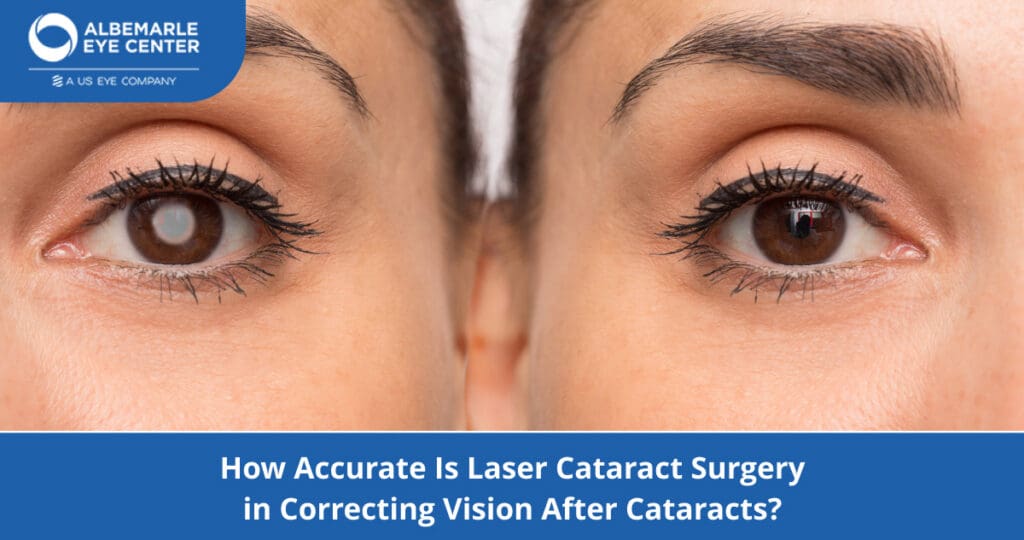
Blurry vision, glare from headlights, faded colors, and difficulty reading can make everyday activities feel frustrating and uncertain. For many people considering cataract treatment, the biggest concern is not simply whether surgery will remove the cataract, but whether their vision will be corrected accurately afterward.
Table of Contents
Laser cataract surgery is a highly precise procedure, involving creating an opening in the lens capsule of the eye and breaking the cataract into smaller pieces. However, the laser is only one part of the vision-correction process. Your final result also depends on the health of your cornea, retina, and optic nerve, the accuracy of your preoperative measurements, the intraocular lens selected, and how your eye heals.
The realistic answer is that laser technology can increase success rates and allow several surgical steps to be more reproducible. While no surgeon can guarantee perfect or glasses-free vision. Overall, laser cataract surgery is highly effective: the National Eye Institute reports that about nine out of 10 patients see better afterward.
This article explains the accuracy of laser cataract eye surgery, how the technology works, what affects cataract surgery outcomes, and what patients can realistically expect during recovery.
What Is Laser Cataract Surgery?
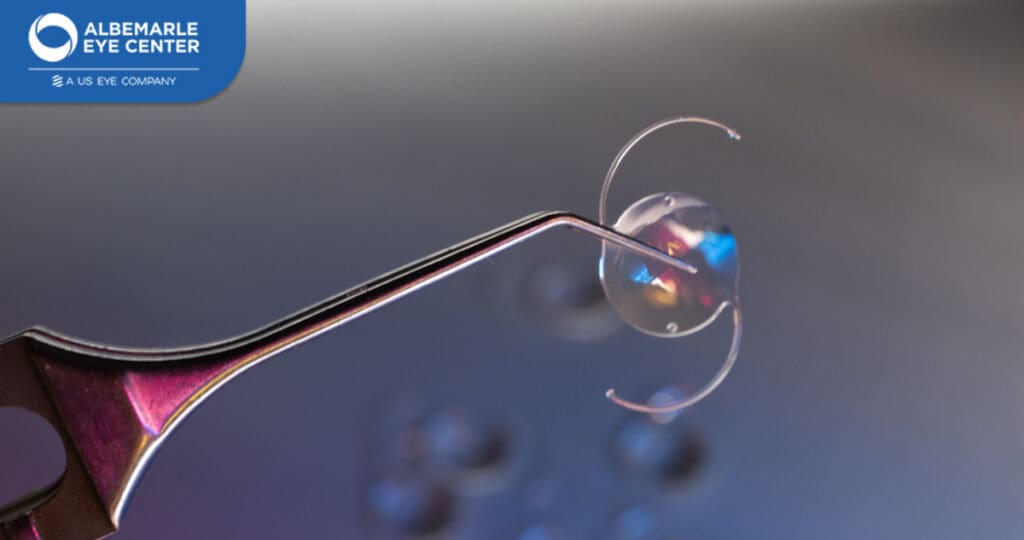
A cataract develops when the eye’s normally clear natural lens becomes cloudy. During cataract surgery, an ophthalmologist removes the clouded lens and replaces it with a clear artificial intraocular lens, commonly called an IOL.
In traditional cataract surgery, the surgeon performs the major procedural steps with specialized handheld instruments. In laser cataract surgery, a computer-guided laser performs part of the surgery at a precise level, such as:
- Creating corneal incisions
- Making a circular opening in the lens capsule
- Softening or fragmenting the cataract
- Creating certain incisions to help manage corneal astigmatism
How Laser Technology Improves Precision in Cataract Removal
The femtosecond laser delivers extremely brief pulses of energy at programmed locations inside the eye. This allows the surgeon to plan the size, shape, and location of certain incisions before activating the laser.
One of the clearest technical advantages is the consistency of the capsulotomy, the circular opening made in the thin capsule surrounding the cataract. A well-centered, consistently sized opening may support stable positioning of the IOL. The laser can also divide a dense cataract into smaller sections, potentially reducing the amount of ultrasound energy needed during removal.
That distinction is important when asking how precise laser cataract surgery is. The laser is extremely precise in executing its programmed treatment pattern, but a technically precise incision does not automatically mean every patient will achieve the same prescription or visual outcome.
The Role of Advanced Imaging in Surgical Accuracy
Image-guided laser platforms map the eye before treatment and allow the surgeon to customize the laser pattern to the patient’s anatomy.
These measurements help determine:
- The appropriate IOL power
- The shape of an astigmatism
- The intended incision position
- The desired visual target after surgery
Measurements must be reliable. Dry eye and other ocular-surface conditions can distort the corneal readings used to calculate an IOL, which is why an ophthalmologist recommends treating ocular-surface inflammation before final measurements are taken.
How Intraocular Lenses Affect the Final Vision Outcome
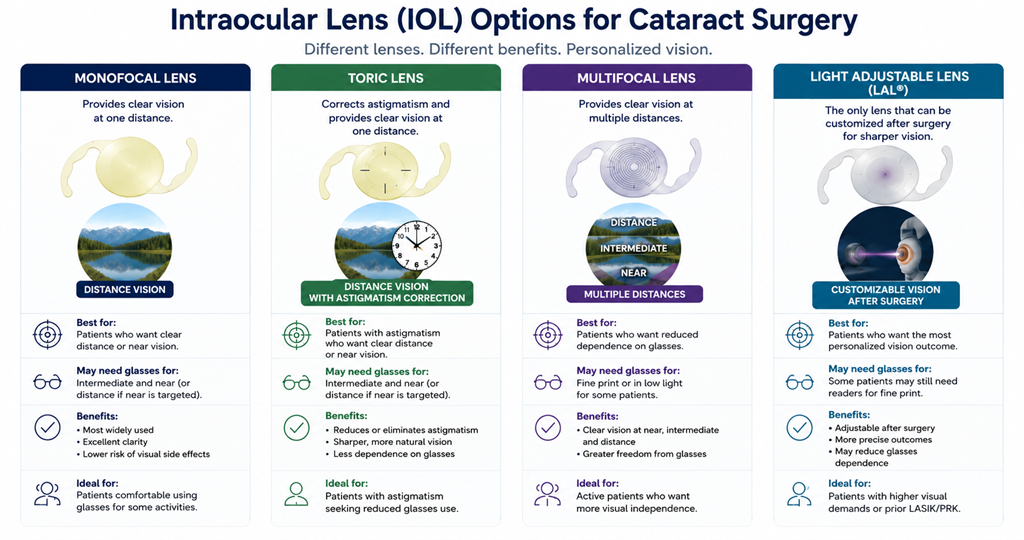
The IOL is one of the most influential factors in vision correction after cataract surgery. Removing the cloudy cataract allows light to enter the eye clearly again, but the IOL determines how that light is focused.
| IOL option | Primary visual goal | Possible need for glasses |
| Monofocal | Clear focus at one selected distance | Often needed for other distances |
| Toric | Correct a selected focus and corneal astigmatism | May still be needed for reading or other tasks |
| Multifocal | Provide vision at more than one distance | May reduce, but not eliminate, glasses use |
| Light Adjustable Lens | Allow postoperative refinement of lens power | Dependence varies by final treatment target |
Monofocal lenses generally provide their sharpest focus at a single distance. Toric lenses are designed for patients with corneal astigmatism. Multifocal lenses divide light into multiple focal ranges, while the Light Adjustable Lens can be refined after implantation through a series of controlled light treatments.
No one lens is ideal for every patient. Eye health, lifestyle, reading habits, previous eye surgery, and tolerance for glare or halos should all be discussed during the consultation.
How Accurate Is Vision Correction After Laser Cataract Surgery?
Laser cataract surgery can provide highly predictable vision correction, but the final result depends on more than just the laser technology. The procedure’s accuracy is influenced by factors such as the precision of eye measurements, the intraocular lens (IOL) selected, existing astigmatism, overall eye health, and the eye’s healing after surgery.
The femtosecond laser helps improve precision during certain steps of cataract surgery, such as creating corneal incisions and opening the lens capsule. However, achieving the desired visual outcome depends on developing a personalized surgical plan tailored to each patient’s eye condition and lifestyle needs.
Some patients may achieve clear distance or near vision with reduced dependence on glasses, while others may still need corrective lenses for specific activities. During a cataract consultation, your ophthalmologist can discuss realistic expectations and help determine which lens option may best support your vision goals.
Realistic expectations
Accuracy should be viewed as a range rather than a guarantee. A patient may:
- Reach the planned distance-vision target
- Finish slightly nearsighted or farsighted
- Retain some astigmatism
- Need reading glasses, distance glasses, or both
- Require additional treatment for another eye condition
A precise operation can successfully remove the cataract, while an unrelated retinal, corneal, or optic nerve condition continues to limit visual sharpness.
Quick fact: Surgical precision and vision-correction accuracy are related but different. The laser precisely performs parts of the operation, while the final vision depends on the entire treatment plan, including eye measurements, IOL selection, astigmatism management, and healing.
Factors That Influence Cataract Surgery Outcomes
Several factors can affect the results of cataract surgery, including the health of the eye, the accuracy of pre-surgical measurements, the choice of intraocular lens (IOL), and the presence of conditions such as astigmatism, glaucoma, or retinal concerns. A personalized treatment plan and realistic expectations can help patients understand their potential vision outcomes after surgery.
Overall eye health
Macular degeneration, diabetic retinal disease, glaucoma, corneal scarring, and optic-nerve damage may limit how much vision improves after the cloudy lens is removed.
IOL calculations
The surgeon calculates lens power using the eye’s length, corneal shape and other measurements. Eyes with unusual anatomy or a history of LASIK, PRK, or other corneal procedures may require specialized formulas and additional planning.
Astigmatism
A standard spherical IOL does not automatically correct corneal astigmatism. Depending on its type and amount, astigmatism may be addressed with a toric IOL or carefully planned corneal incisions.
Lens selection and visual goals
A patient prioritizing nighttime driving may have different lens considerations than someone hoping to reduce dependence on reading glasses. Matching the lens to the patient’s daily activities is as important as the surgical technology itself.
Healing response
Temporary inflammation, corneal swelling, dryness and subtle changes in the IOL’s final position can affect early vision.
Patient tip: Before surgery, describe the activities that matter most to you, such as night driving, computer work, reading, golf, or close-detail hobbies. This helps your surgeon recommend a vision target and lens rather than choosing solely from a product category.
Does Laser Cataract Surgery Improve Vision and Reduce Glasses Dependence?
Cataract surgery improves vision primarily by removing the cloudy natural lens and replacing it with a clear IOL. The laser assists with selected surgical steps; it is not the only reason vision improves.
Whether glasses are needed afterward depends largely on the selected IOL and your visual goals. A monofocal lens may provide clear distance vision while leaving reading vision dependent on glasses. Toric, multifocal, and adjustable lenses may reduce dependence in suitable patients, but none can promise complete freedom from eyewear. The American Academy of Ophthalmology recommends considering eye health, lifestyle, and acceptable visual trade-offs when choosing an IOL.
Risks and Limitations That May Affect Accuracy
Laser cataract surgery has many of the same potential risks as other forms of cataract surgery. These can include infection, bleeding, inflammation, corneal swelling, retinal detachment, changes in eye pressure, IOL movement, and posterior capsule opacification. Serious complications are uncommon, but no eye operation is risk-free.
Other limitations include:
- The laser performs only part of the procedure.
- A small residual prescription may remain.
- Glasses may still be needed.
- Multifocal optics may produce glare or halos for some patients.
- An existing eye disease may limit visual improvement.
- Additional treatment may occasionally be recommended.
These possibilities should be reviewed during a personalized vision correction consultation.
Recovery Timeline and Vision Stabilization
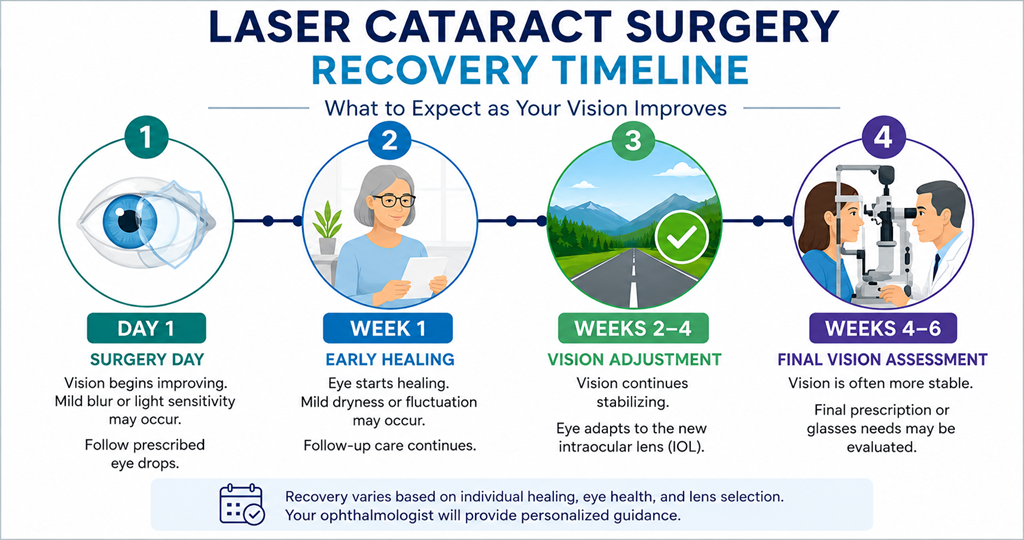
Many patients notice clearer vision during the first day or several days after surgery, but early blur, mild irritation, and fluctuating focus can occur. Recovery time can vary depending on individual healing, overall eye health, lens selection, and whether additional vision correction is needed.
Typical progression
| Recovery Stage | What Patients May Experience |
| First 24–48 hours | Vision may begin to improve, but mild blurriness, light sensitivity, or irritation may occur. |
| First Week | Vision often becomes clearer as the eye heals. Patients should follow prescribed eye-drop instructions and activity restrictions. |
| 2–4 Weeks | Vision continues to stabilize, and fluctuations caused by healing or dryness may decrease. |
| 4–6 Weeks | Many patients reach a more stable vision outcome, and the ophthalmologist can evaluate the final result. |
Call your eye care team promptly for severe pain, a sudden decrease in vision, increasing redness, flashes, new floaters, or a curtain-like shadow.
Patient Outcomes and Satisfaction
Cataract surgery continues to have high patient satisfaction rates, with outcomes influenced by visual improvement, lifestyle needs, and the extent to which patients’ expectations match their results. A 2024 multicenter study analyzing patient-reported outcomes from more than 2,500 cataract surgery patients found that satisfaction was strongly associated with factors such as visual quality, reduced visual disturbances, and overall postoperative experience.
While most patients experience meaningful improvement after cataract surgery, the final outcome can vary based on eye health, intraocular lens selection, and individual healing. Discussing your vision goals and expectations with your ophthalmologist before surgery can help create a treatment plan designed around your specific needs.
Key Takeaways
- Laser cataract surgery provides highly reproducible precision during selected surgical steps.
- The laser does not guarantee a specific prescription or glasses-free vision.
- IOL calculations, lens choice, astigmatism, and eye health strongly influence the final result.
- Both laser-assisted and traditional cataract procedures generally achieve excellent outcomes.
- About nine out of 10 cataract surgery patients see better afterward.
- A personalized examination is the best way to estimate your likely result.
Conclusion:
Laser technology provides ophthalmologists with a precise, image-guided way to perform key portions of cataract surgery. However, the best measure of the accuracy of laser cataract eye surgery is not simply whether a laser was used. It is how well the complete plan, such as preoperative measurements, surgical technique, IOL selection, and postoperative care, matches the patient’s eyes and visual priorities.
Albemarle Eye Center offers laser cataract surgery and multiple lens options for patients in Edenton, Elizabeth City, Kinston, Kitty Hawk, and Washington, North Carolina. Our cataract team can evaluate your eye health, discuss realistic outcomes, and recommend an approach based on your daily visual needs.
Schedule a Cataract Evaluation
Are cataracts interfering with reading, driving, or recognizing faces? Schedule a cataract surgery evaluation with us. A personalized vision correction consultation can help you understand your lens choices and expected outcome.
Frequently Asked Questions
Can dry eyes make cataract surgery measurements less accurate?
Yes. An unstable tear film can alter corneal curvature readings and make astigmatism measurements less consistent. Your ophthalmologist may recommend artificial tears, prescription medication, or another dry-eye treatment before repeating the measurements used to calculate your IOL.
Is IOL calculation less predictable after LASIK or PRK?
Previous corneal refractive surgery changes the relationship between the front and back surfaces of the cornea, which can make standard IOL calculations less reliable. Specialized formulas, historical records, and additional imaging may improve planning.
What is a “refractive surprise” after cataract surgery?
A refractive surprise means the eye heals with more nearsightedness, farsightedness or astigmatism than planned. Depending on the amount and the patient’s needs, options may include glasses, contact lenses, corneal laser treatment, an IOL procedure or postoperative adjustment when an adjustable lens was implanted.
Why can vision become cloudy again months or years later?
The removed cataract cannot grow back. However, the thin capsule supporting the IOL can become cloudy, a condition called posterior capsule opacification. It is commonly treated with a brief YAG laser capsulotomy that creates a clear opening behind the IOL.
Can one eye be targeted for distance and the other for near vision?
Some patients choose a strategy called monovision, in which the eyes are assigned different focusing targets. It may reduce dependence on glasses, but it can also affect depth perception or visual comfort. A contact lens trial or a detailed discussion may help determine whether this approach meets the patient’s visual needs.