
If cataracts are making everyday tasks more difficult, such as reading, driving, and recognizing faces, it may be time to consider treatment. Cataract surgery restores clarity to your vision and can help you feel more confident and independent in your daily life.
Table of Contents
Albemarle Eye Center offers LenSx® laser cataract surgery as a safe and successful way to remove cataracts and help you regain sharp, comfortable vision. Our advanced laser and cataract center offers personalized treatment plans, modern technology, and intraocular lens options tailored to your lifestyle and vision goals.
The blog below explains what typically happens after surgery, how vision improves, and what patients can expect during recovery and beyond.
What Is Laser Cataract Surgery?
Cataracts form when the natural lens of your eye becomes cloudy, often due to aging. This cloudiness can dull colors, blur details, and cause sensitivity to glare or halos around lights. When cataracts begin to interfere with your lifestyle, surgery is the only treatment option.
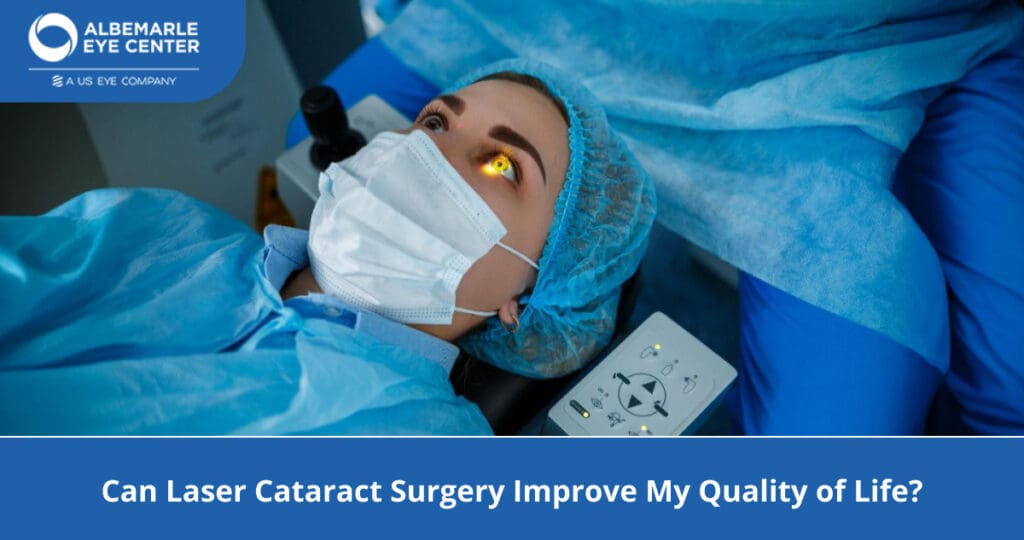
During laser cataract surgery, your surgeon uses advanced technology to guide the procedure. A femtosecond laser creates precise incisions, softens the cataract, and assists with removing the clouded lens. Once the cataract has been removed, the surgeon implants a clear artificial lens called an intraocular lens (IOL) to restore your vision.
At our laser cataract surgery center, patients have access to a range of IOLs, including options that correct astigmatism or lessen their dependence on glasses.
Don’t know if you have cataracts? Read more about the signs.
How Laser Cataract Surgery Improves Everyday Life
1. Brings Visual Clarity Back
Cataracts can make it feel like you’re looking through a foggy window. After surgery, you can expect colors to appear more vibrant and details to come into sharper focus.
2. Makes Night Driving Easier
Many patients experience less glare and fewer halos around lights after surgery, making night driving more comfortable and safer.
3. Supports Daily Independence
When your vision improves, so does your ability to continue life without relying on others. Every day tasks like cooking, shopping, reading, and using your phone will become easier once more.
4. Lowers Risk of Falls or Injury
Better vision often means better depth perception, which helps you move through your home and community with more confidence.
5. Nurtures Emotional Well-Being
Poor vision can affect your mood, energy, and social engagement. Restoring your sight can help you stay active and connected to the people and things you cherish.
Read more about the reasons for getting laser cataract surgery.
How Vision Improves After Cataract Surgery
One of the most noticeable benefits of cataract surgery is improved visual clarity. Removing the cloudy lens allows light to pass through the eye properly again, which can dramatically enhance how patients see the world.
Patients often notice improvements such as:
- Brighter and more vibrant colors
- Reduced glare and halos around lights
- Clearer distance vision
- Improved contrast and detail
These changes contribute to meaningful post-surgery vision improvement, enabling many people to enjoy clearer, more comfortable vision.
What to Expect from the Procedure
Laser cataract surgery is performed as an outpatient procedure. Most patients are in and out within a few hours and return home the same day. You remain awake and relaxed during the procedure, and your eye is completely numbed with drops.
Recovery usually begins right away. Many patients notice clearer vision within 24 to 48 hours. Your care team will provide detailed recovery instructions and schedule follow-ups to monitor your healing.
A consultation is the perfect time to ask questions. Read our top six questiLearn Moreons to ask before getting cataract surgery.
What Happens Immediately After Cataract Surgery?
After laser cataract surgery, most patients spend a short time resting before returning home the same day. Because the procedure is minimally invasive, many people notice improvements in vision within the first 24 to 48 hours.
Your eye may feel slightly irritated, watery, or sensitive to light for a short period of time. These symptoms are normal and usually improve as the eye begins to heal.
Your care team will typically recommend:
- Using prescribed eye drops to prevent infection and reduce inflammation
- Wearing a protective eye shield while sleeping
- Avoiding rubbing or touching the eye
- Attending follow-up appointments to monitor healing
These steps help support a smooth recovery from laser cataract surgery.
Cataract Surgery Recovery Timeline
Healing after cataract surgery usually occurs gradually over several weeks. While many patients experience rapid vision improvement, the eye continues adjusting as it heals.
Typical recovery stages include:
First 24–48 Hours
- Vision may appear clearer but slightly blurry
- Mild irritation or light sensitivity may occur
First Week
- Vision continues to stabilize
- Most normal daily activities can be resumed
Two to Four Weeks
- Healing progresses, and vision sharpens further
- Follow-up appointments ensure proper recovery
One Month
- Vision typically stabilizes
- Glasses prescriptions may be updated if needed
Understanding this timeline helps patients know what to expect after cataract surgery.
Personalized Vision with Intraocular Lenses
We offer a wide range of lens implant options to meet different visual needs:
- Monofocal lenses for clear distance vision
- Toric lenses to correct astigmatism
- Multifocal lenses for improved near and distance vision
- Light Adjustable Lenses (coming April 26th!) for customizable post-surgery vision refinement
Your ophthalmologist will help you select the best lens for your individual goals.

Everyday Life After Cataract Surgery
For many patients, life after cataract surgery becomes noticeably easier and more enjoyable. Improved vision can help restore independence and confidence in daily routines.
After recovery, patients often experience benefits such as:
- Reading and using digital devices more comfortably
- Driving with greater confidence, especially at night
- Recognizing faces and objects more clearly
- Participating in hobbies and outdoor activities
These improvements demonstrate how cataract surgery can positively impact everyday life and overall quality of life.
Know Someone Who Can’t Afford Cataract Surgery?
Cataracts are a leading cause of blindness, and unfortunately, many people go without treatment because they can’t afford care. That’s why Albemarle Eye Center, as part of US Eye, proudly participates in Operation Sight—an initiative that provides free sight-saving cataract surgery to community members in need.
If you or someone you know is uninsured, lacks Medicare or Medicaid, and lives below the poverty line, this program may be able to help. Surgeries will be performed at our Center for Visual Surgical Excellence in Chesapeake, VA, during National Sight Week, October 9–15. Our surgeon, Dr. Jitendra Swarup, donates their time and expertise to make this possible.
Visit our website to learn more and download your application.
Things to Avoid During Recovery
To protect the eye while it heals, patients should follow their doctor’s instructions carefully during the recovery period. Avoiding certain activities can help prevent complications and support proper healing.
Patients are generally advised to avoid:
- Rubbing or touching the eye
- Heavy lifting or strenuous activity
- Swimming or using hot tubs
- Exposure to dust or dirty environments
- Getting water directly in the eye during early recovery
Following these guidelines helps ensure a safe and successful recovery.
When Should You Call Your Eye Doctor?
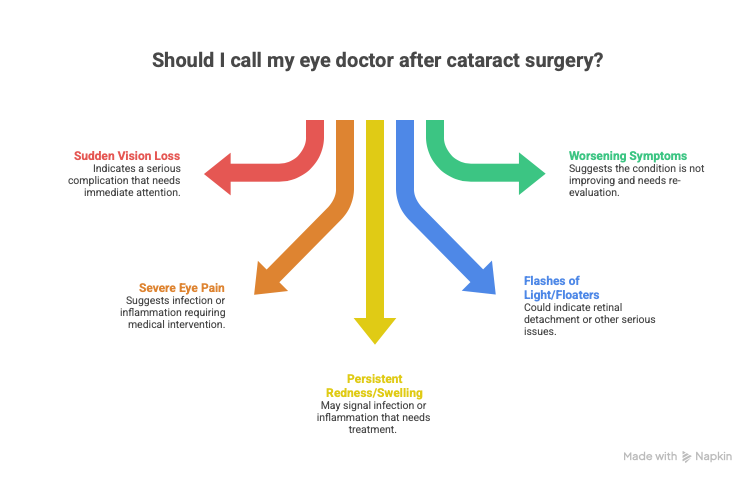
Although cataract surgery recovery is typically smooth, it is important to contact your eye doctor if you experience unusual symptoms.
Call your provider if you notice:
- Sudden vision loss
- Severe eye pain
- Persistent redness or swelling
- Flashes of light or new floaters
- Symptoms that worsen rather than improve
Prompt communication with your eye care provider helps ensure the best possible outcome.
Key Takeaway
- Most patients begin noticing post-surgery vision improvement within 24 to 48 hours.
- Laser cataract surgery recovery is typically smooth, with many people returning to normal activities within a few days.
- Vision often continues improving gradually as the eye heals over the following weeks.
- Clearer vision can make a noticeable difference in everyday life after cataract surgery, from reading and driving to recognizing faces and enjoying hobbies.
- Many patients experience reduced glare and fewer halos around lights, especially when driving at night.
- Advanced intraocular lens options may reduce dependence on glasses for some patients.
- Following your doctor’s post-surgery instructions and attending follow-up visits helps ensure proper healing and optimal results.
- Knowing what to expect after cataract surgery can help patients feel more prepared and confident throughout the recovery process.
Talk to an Expert Today
With locations across eastern North Carolina and a reputation for compassionate, high-quality care, Albemarle Eye Center is a regional leader in laser cataract treatment. Dr. Jitendra Swarup, an experienced cataract surgeon, is dedicated to helping patients achieve clear vision and a better quality of life using the latest technology and techniques.
If you’re experiencing cloudy vision, increased glare, or trouble seeing at night, schedule a consultation at one of our locations in Edenton, Elizabeth City, Kinston, Kitty Hawk, or Washington.
**The information offered in this blog is not intended to substitute expert medical advice. Always seek a qualified healthcare professional for any questions or concerns about your specific medical condition.**
Frequently Asked Questions
How long does it take to recover from laser cataract surgery?
Most patients notice significant vision improvement within 24 to 48 hours after surgery. However, full recovery and stabilization of your vision typically occur over the next two to four weeks. During this period, your eye continues to heal and adjust to the new lens.
When can I drive after cataract surgery?
You should not drive immediately after surgery. Most patients can resume driving within a few days once their vision is clear and their eye doctor has confirmed it is safe. Always follow your doctor’s advice before getting behind the wheel.
Is blurry vision normal after cataract surgery?
Yes, it is common to experience some blurry or fluctuating vision in the first few days after surgery. This usually improves quickly as your eye heals. If blurriness persists or worsens, contact your eye doctor.
Can I return to daily activities after cataract surgery?
Many people can return to light daily activities, such as reading, watching TV, and using digital devices, within a day or two after surgery. However, you should avoid strenuous activities, heavy lifting, swimming, and getting water in your eye until your doctor advises it is safe.
How soon will my vision stabilize?
While many patients notice clearer vision within the first couple of days, it can take 2 to 4 weeks for your vision to stabilize fully. At your follow-up appointments, your doctor will monitor your healing and let you know when your vision has reached its best.
Albemarle Clinical Trials
At Albemarle Eye Center, our research department continues to take part in numerous FDA-monitored clinical trials.
Our advanced eye care center is committed to improving ocular health, which is why we’re always on the search for new treatment options, medications, and medical devices that can benefit our patients.