
Cataracts can often be seen as a natural aspect of aging, gradually making their presence known as we go through life. Whether you’re in your late thirties, noticing subtle changes in your vision, or celebrating a milestone in your sixties, it’s perfectly normal to have questions about cataracts and the potential for surgery.
Table of Contents
Many people wonder, “When might this affect me?” “How long does it last?” or “Should I start thinking about surgery?” You are certainly not alone in these considerations; it’s normal. According to the National Eye Institute (NEI), more than 24.4 million Americans over age 40 already have cataracts, and by age 80, over 50% either have cataracts or have undergone cataract surgery. This phase of life invites various questions, not just about when to take action but also about the nature of the surgery and the early signs that may suggest cataracts are developing.
This blog will clarify the typical age for laser treatment for cataracts, show the early warning signs to watch for, and guide you through the steps toward making that important appointment with your healthcare provider.
What Are Cataracts and How Do They Form?
Cataracts occur when proteins in the eye’s natural lens break down and clump together, causing cloudy or blurred vision.
They usually form gradually and can develop in one or both eyes. While aging is the primary cause, cataracts can also result from diabetes, prolonged steroid use, eye injuries, or even genetics.
Once cataract symptoms progress to the point that they interfere with daily life, the only effective treatment is cataract surgery.
What Is The Average Age For Cataract Surgery?
As of 2026, the average age for cataract surgery is typically between 65 and 70. However, there is no specific age when everyone needs surgery. Doctors usually recommend cataract surgery when vision changes begin affecting daily activities such as reading, driving, or other tasks. The right timing depends on cataract progression, symptoms, and an individual’s overall eye health.
According to the National Eye Institute, by the time people turn 80 years old, around 80% will either have cataracts or have undergone laser cataract surgery.
The progression of cataracts begins subtly; for example, around age 40, the risk for cataracts starts to increase. Specifically, statistics indicate that 2.51% of adults aged 40-49 have already developed cataracts. As individuals reach the 65-69 age bracket, this number surges to almost 25%, with gender differences marking the prevalence even further—27.58% of women and 21.53% of men in that same age range are affected. The numbers continue to climb in older age groups, reaching 63.14% for men and 71.24% for women over 80.
Average Age When Cataract Surgery Is Most Common
While cataracts may begin earlier, the average age for cataract surgery is typically between 65 and 70 years old.
That said, there’s no universal “best age for cataract surgery.” The timing depends on when vision loss becomes disruptive enough to affect quality of life.
Most ophthalmologists recommend surgery when blurred or cloudy vision makes driving, reading, or daily activities unsafe or difficult.
What Age Do Cataracts Typically Start? Treatment Options by Age
Cataracts typically begin developing with early vision changes in a person’s 40s and 50s, although many people do not need cataract surgery until their 60s, 70s, or 80s. Treatment depends on how cataracts affect daily activities, vision quality, and overall eye health.
| Age Range | What to Expect |
| 40s–50s | Early cataract changes may begin, including subtle vision changes or increased glare. Monitoring and regular eye exams are often recommended. |
| 60s–80s | Cataracts become more common, and some individuals may consider surgery when vision problems interfere with daily activities. |
| Any age | Cataracts caused by factors such as diabetes, eye injury, medications, or genetics may require evaluation earlier. |
Non-Surgical vs. Surgical Treatment Options for Cataracts
- Non-surgical options for early cataracts: Updated glasses prescriptions, improved lighting, anti-glare lenses, and managing contributing health conditions may help some people manage early cataract symptoms. Regular eye exams can help monitor vision changes.
- When cataract surgery becomes necessary: Cataract surgery may be recommended when cloudy vision begins interfering with daily activities such as reading, driving, working, or other tasks. The decision is based on how much cataracts affect vision and quality of life.
- Surgical treatment for cataracts: During cataract surgery, the cloudy natural lens is removed and replaced with an artificial intraocular lens (IOL) to help restore clearer vision.
- Determining the right treatment approach: An eye care professional can evaluate cataract progression, symptoms, and overall eye health to determine when treatment may be appropriate.
Factors That Can Cause Cataracts at a Younger Age
Although cataracts are mostly age-related, they can occur in younger adults due to:
- Diabetes (especially poorly controlled blood sugar)
- Eye injuries or trauma
- Prolonged corticosteroid use
- Smoking
- Excessive UV exposure
- Family history of early cataracts
This means that even people in their 40s and 50s may require cataract surgery earlier than expected.
Lifestyle and Health Risks That Influence Timing
Lifestyle and systemic health play a major role in how quickly cataracts progress.
For example:
- Uncontrolled diabetes accelerates cataract formation.
- Smoking and poor nutrition increase risk.
- UV radiation without sunglasses speeds up lens damage.
According to the World Health Organization (WHO), cataracts remain the leading cause of blindness globally, responsible for 51% of world blindness.
How to Decide the Right Time for Surgery
There’s no strict timeline for surgery. Instead, the decision should be based on:
- Daily impact: Is vision interfering with reading, driving, or hobbies?
- Glasses effectiveness: Do prescription updates no longer help?
- Safety concerns: Are cataracts causing falls or accidents?
If you’re asking “How long does cataract surgery take?” — the surgery itself is usually 10–20 minutes per eye, though full healing takes several weeks.
Benefits of Early Surgery vs. Risks of Waiting Too Long
Benefits of early cataract surgery:
- Restores independence and confidence
- Lowers risk of falls and accidents
- Allows for better surgical outcomes while cataracts are less advanced
Risks of waiting too long:
- Cataracts become harder and more complex to remove
- Increased surgical complication rates
- Prolonged vision loss reduces quality of life
The American Academy of Ophthalmology (AAO) warns that delaying surgery too long can increase surgical difficulty and recovery risks.
Should Younger Patients Think About Cataract Surgery?
Younger patients often hesitate when it comes to laser treatment for cataracts, thinking it is a procedure exclusive to older people. However, recent studies show a rise in cataract cases among younger populations, with specific statistics revealing acquired cataracts can arise due to various factors like diabetes, trauma, or prolonged steroid use.
This means people in their forties or fifties need to treat their vision with proactiveness and consult a healthcare provider if they notice signs like cloudy or dim vision. Early intervention can cause better visual outcomes, as younger patients typically recuperate faster and may enjoy prolonged periods of clearer vision than their older counterparts.
Because modern laser treatment for cataracts is safer and more accurate than ever, younger people can and should consider this option when confronted with cataract symptoms.
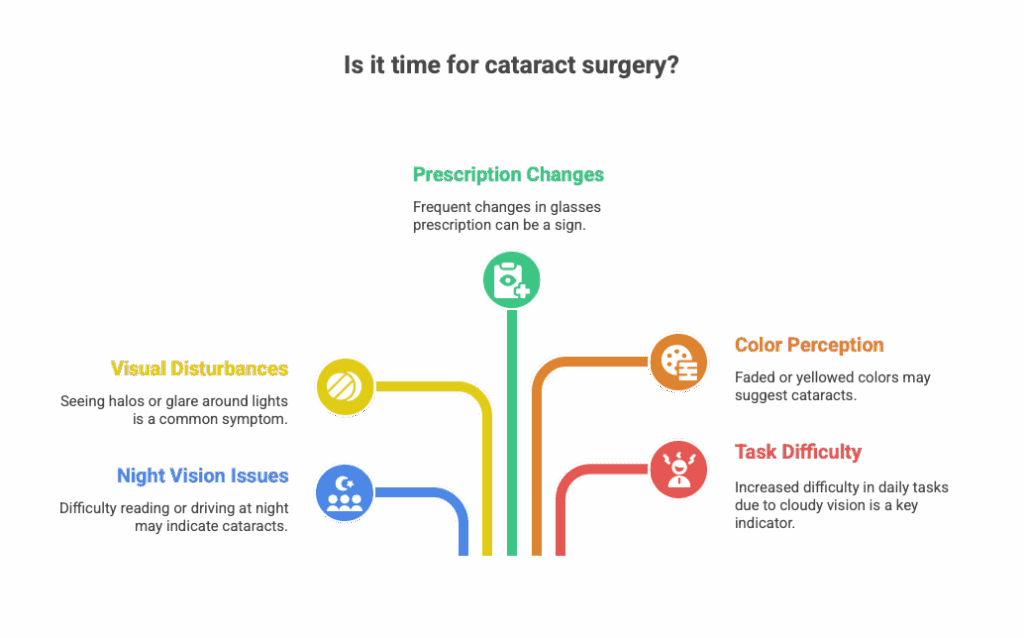
When To See an Eye Doctor
- Clouded or blurred vision
- Difficulty seeing at night or in dim light
- Increased sensitivity to glare or bright lights
- Halos around lights
- Frequent changes in prescription glasses or contact lenses
- Faded or yellowed colors in vision
- Double vision in a single eye
- Difficulty reading or performing tasks up close
Why Early Intervention Matters
Early prevention, detection, and intervention do not discriminate against age and should be practiced by everyone. Detecting cataracts early on can impact long-term vision health and overall quality of life. Laser cataract surgery for seniors or young adults doesn’t differ much other than seniors being more susceptible to the disease.
Although cataracts are commonly linked to aging, younger people can also experience them due to injuries, certain health issues, medications, or even through genetics. Catching cataracts in their early stages allows individuals to take proactive steps in managing their vision. Consulting an eye care professional in a timely manner opens the door to appropriate treatments or lifestyle changes that can help prevent or reduce vision problems. Plus, those who seek help sooner often enjoy better surgical results—young patients usually recover faster and have improved visual outcomes compared to those who wait.
What to Discuss With Your Eye Doctor Before Deciding
Before surgery, ask your ophthalmologist:
- Do my cataract symptoms justify surgery now?
- What is the best age for cataract surgery in my case?
- What will cataract surgery recovery involve?
- What type of IOL is best for my lifestyle?
- Are there risks to waiting longer?
These discussions help tailor the procedure to your vision needs.
Conclusion
Cataracts are a natural part of aging, but they don’t have to limit your life. The right time for surgery isn’t defined by age alone, it’s defined by cataract symptoms and how much they impact your independence and daily activities.
While the average age for cataract surgery is around 65–70, many patients undergo the procedure earlier, depending on their needs. The surgery itself is quick, often just 15 minutes per eye, and while cataract surgery recovery may take several weeks, most patients enjoy clearer vision within days.
If you’re wondering whether it’s time, the best step is to consult your ophthalmologist. Together, you can decide the best age for cataract surgery for your unique situation.
At Albemarle Eye Center, we’ve helped thousands of patients across Edenton, Elizabeth City, Kinston, Kitty Hawk, and Washington, North Carolina restore their vision and quality of life. If you’re experiencing age-related vision changes and cataracts, or you experience symptoms like blurry vision, double vision, or faded vision, don’t wait — schedule an appointment with an eye care professional today to ensure your vision health is protected and to rule out any underlying health issues that could be contributing to these changes.
**The information offered in this blog is not intended to substitute expert medical advice. Always seek a qualified healthcare professional for any questions or concerns you may have regarding your specific medical condition.**
Frequently Asked Questions
What is the best age to get cataract surgery?
There is no single “best” age for cataract surgery. Most people have the procedure between ages 65 and 70, but the ideal timing depends on how much cataracts interfere with your vision and daily life. Surgery is recommended when symptoms make activities like driving, reading, or working difficult or unsafe. Your eye doctor can help you decide when it’s right for you.
Can younger people get cataracts and need surgery?
Yes, while cataracts are most common with aging, younger people can develop them due to factors like diabetes, eye injuries, prolonged steroid use, excessive UV exposure, or genetics. If cataracts cause significant vision problems—regardless of age—surgery may be necessary.
How do I know when cataract surgery is necessary?
Cataract surgery is typically needed when vision problems start to affect your daily activities and cannot be corrected with glasses or contacts. Signs include trouble seeing at night, increased glare or halos, frequent changes in prescription, or difficulty with tasks like reading and driving. Your eye doctor can assess your symptoms and recommend the best time for surgery.
Is there an age limit for cataract surgery?
There is no upper age limit for cataract surgery. People well into their 80s or 90s can safely undergo the procedure if they are in good general health. The decision is based on your overall health and how much cataracts affect your quality of life—not just your age.
How long does cataract surgery last?
The artificial intraocular lens (IOL) placed during cataract surgery is designed to be permanent and typically does not need replacement. In some cases, posterior capsule opacification (PCO), sometimes called a secondary cataract, may develop years after surgery. This can usually be treated with a simple YAG laser procedure to restore clarity by opening the cloudy capsule behind the lens implant.
Will cataracts ever “go away” on their own?
No, cataracts do not go away on their own. They tend to progress over time and may worsen if untreated. The only effective treatment is surgical removal of the cloudy lens and replacement with an artificial lens.